
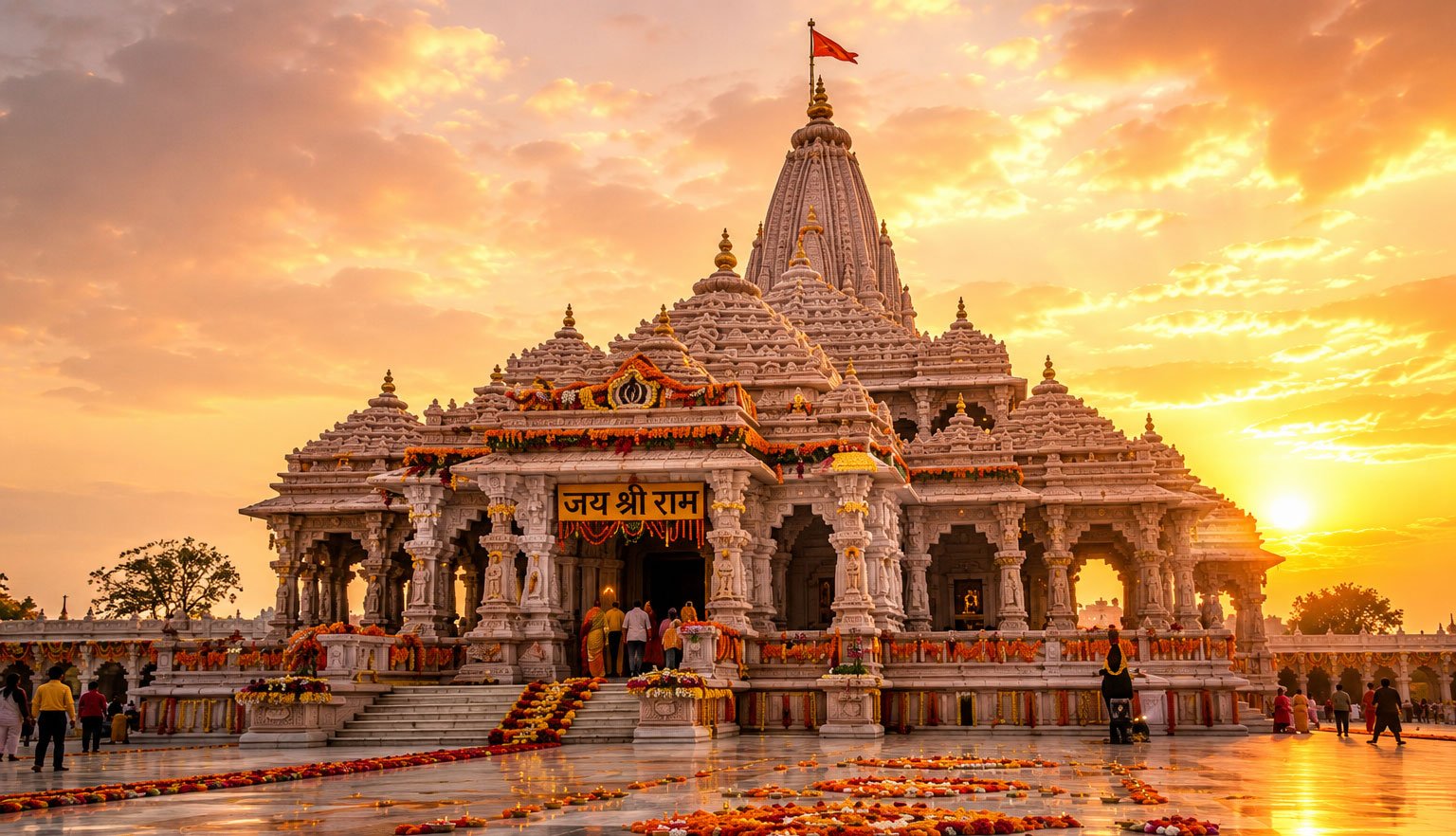
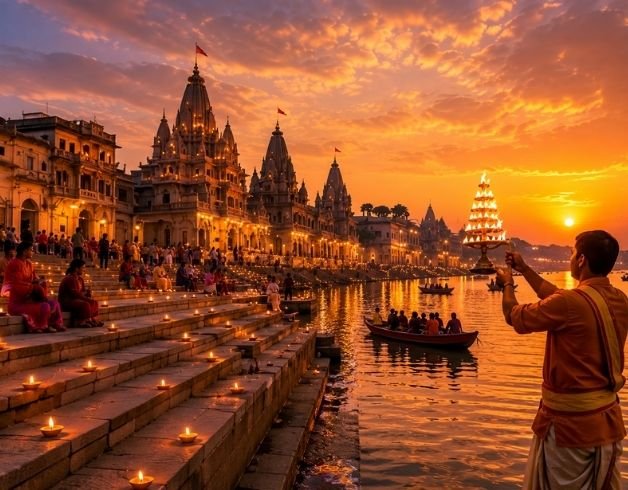



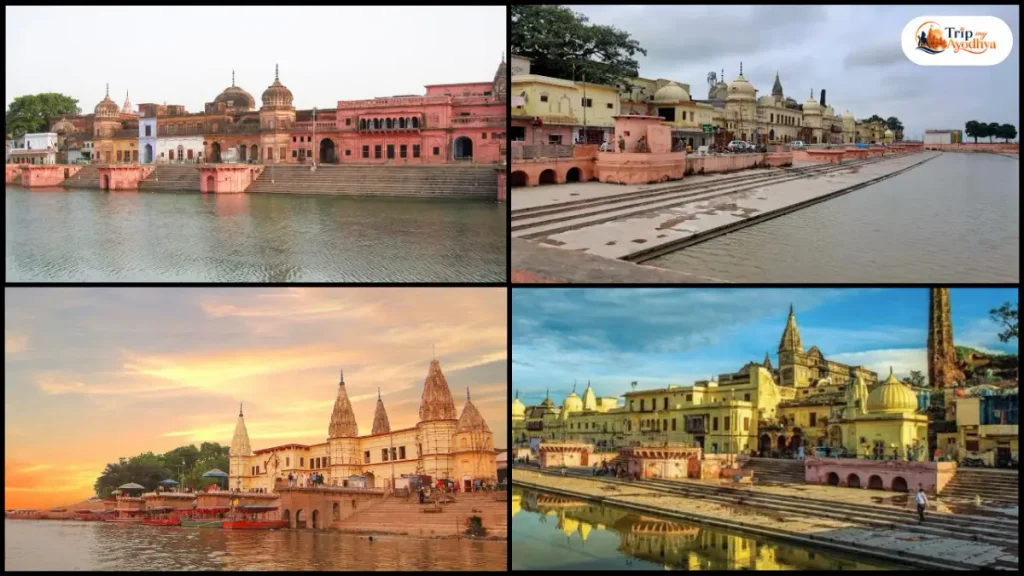
The empyreal ghat in the most holy city of Ayodhya on banks to Saryu River is one among sacred landmarks for identity by faith for not just Hindus but home to several religions merged with humanity. The most prominent riverfront sites are Ram Ki Paidi, Naya Ghat and Guptar Ghat; yet many other ghats associated with various Hindu traditions and legends are cited in historical texts.
These riverfront spots are frequented for holy bathing, prayer and meditation purposes along with rituals including Saryu Aarti during sunrise and sunset to sit by in silence. Ram Ki Paidi is particularly popular for its pilgrimage activity but Guptar Ghat has a separate traditional connection with Lord Rama’s final journey.
One can also combine the ghats with prominent landmarks like Ram Mandir, Hanuman Garhi, Kanak Bhawan and Nageshwarnath Temple as they constitute an integral part of complete Ayodhya pilgrimage.
What Made the Ghats of Ayodhya More Special?
River Saryu, like a lifeline, has always been a core element for the religious identity of the city of Ayodhya. A town which literally has been built along the flowing river Saryu, which also is very much related to Lord Rama, Ramayan, and the sacred geography of ancient Kosala. District Ayodhya says that there once was an important old town near holy river Saryu which is now Ayodhya. They are not sure, but they think that town was the very palace where Bhagwan Shri Ram was born, which is now Ayodhya.
Not just the ghats but the river front area itself, as far as pilgrims or devotees are concerned, it is not just some sort of place alongside a river
these are places which allow you to perform the following actions:
- To take holy dips
- To pray and meditate
- To present the river with flower-water
- Conduct rituals of puja etc.
- See the Saryu Aarti (Ritual)
- To reminisce about Ramayana
- To see either sunrise or sunset
- Just to peacefully enjoy a walk beside the Saryu
A visit along the river front will also differ a lot from seeing one of the big temples. One, you’ll feel very religious at Ram Mandir or Hanuman Garhi, but time beside the river will offer you a slower, more contemplative experience. Ram Ki Paidi is the official description of the ghats on Saryu where devotees have taken a holy dip as an act of cleansing the soul since time immemorial.
How Many Ghats Are There in Ayodhya?
There is no fixed number of ghats in Ayodhya to speak about it as an issue. This is basically because there is a difference in the way the word ‘ Ghat’ is being used. The bigger riverfront places that have been developed are referred to by some, whereas the smaller bathing places, riverfront historical sites and the places of significance mentioned in religious books or local stories are mentioned by others
To a modern day visitor, the most important ones are:
- Ram Ki Paidi
- Naya Ghat
- Guptar Ghat
On the other hand, traditional accounts may be much longer and feature names like:
- Lakshman/Sahasra Dhara Ghat
- Swarg Dwar Ghat
- Ram Ghat
- Janaki Ghat
- Ahilyabai Ghat
- Nageshwarnath Ghat
- Papamochan Ghat
- Rinamochan Ghat
- Raj Ghat
- Brahma Kunda Ghat
- Prahlad Ghat
- Chakra Tirtha
- Vishnuhari Ghat
- Vasudev Ghat
- Jhunki Ghat
- Gau Ghat
- Tulsi Ghat
Hence, it is more correct to state that Ayodhya has a series of ghats that have religious or traditional significance in the region and are the result of centuries of human habitation, rather than stating one figure as the number of ghats in the city.
The Saryu River and its Connection with Ayodhya
In many ways, the Saryu River constitutes the life and soul of Ayodhya’s holy atmosphere. Ayodhya’s spiritual heritage is closely linked with the figure of Lord Rama. In fact, Ayodhya’s identity as a holy city is so closely tied to it that many stories from the Ramayana are told with the backdrop being Ayodhya and that includes the story of how Lord Rama bathed himself on the banks of the Saryu River.
According to Hindu mythology, the Saryu River is believed to be holy because Lord Rama bathed in the river. Pilgrims have always performed religious rituals such as bathing, prayers and offering their faith as a form of worship to this river on the Saryu.
Ram Ki Paidi is one of such places where devotees of the Saryu River show their spiritual attachment through the belief that a pre-dawn bath at this site offers tremendous spiritual benefits. In addition to a bath in the river, the devotee’s entire pilgrimage is a matter of cleansing and sanctifying by means of prayer and remembrance.
Nonetheless, it is necessary to draw a difference between religious beliefs and historical facts that have been proved as such. The narratives related to the river and its various ghats are part of Ayodhya’s continuous religious tradition, which one should know in that setting.
How the River Saryu is worshipped as holy in Ayodhya
In Ayodhya, river Saryu is worshipped as a holy water source, which according to tradition and scriptures has a spiritual connection with the life of Lord Rama.
In Ayodhya, the Saryu is a sacred source of water in which according to tradition and the Vedas the bath of Lord Rama was a spiritually significant act. The Saryu River is one of the reasons why pilgrims visit Ayodhya and the river has become a symbol of Ayodhya’s identity along with Lord Ram. A large number of devotees come to the banks of this river for a holy bath.
Ram Ki Paidi The Well-known Ghat Complex in Ayodhya
Ram Ki Paidi is the best of Ayodhya ghat complexes that can be identified. The book ‘Ayodhya District Profile’ has described Ram Ki Paidi as a collection of ghats built along the Saryu river’s bank. At night, the view of the riverfront is simply breathtaking as it lit up with the lights.
“Paidi” literally means stairs or steps, so the name “Ram Ki Paidi” generally means “Ram’s stairs”. According to religious faith of the devotees, after returning from the forest, Lord Rama came here first and offered prayers and performed ritual baths before he bathed in the river. According to legend, if one takes a bath in the river before sunrise one will be blessed with lots of merits.
Why pilgrim visit Ram Ki Paidi
At Ram Ki Paidi, pilgrims are seen coming to:
- To have a dip in Sanyu River a Holy Bath
- For offering prayers
- To sit near the river
- To take part in prayer sessions at night on riverside
- To see the illuminated area of ghat
- To visit nearby temples
- To snap photos of river view
- To enjoy festival celebrations here
Ram Ki Paidi also has a large number of religious places. Nageshwarnath temple is situated at Ram Ki Paidi while Chandra Hari and Vishnu Hari Temples and other sacred places are near here. On Deepotsav night, hundreds and hundreds of lights are hung throughout Ayodhya riverfront, this site also is illuminated by the lamps and the beauty of the site at that time is just unmatched.
👉Ram Ki Paidi Ayodhya – Timings, Evening Light Show & Ghat Guide
Naya Ghat, A Major Gateway Through the Saryu
Naya Ghat is another riverfront area of Ayodhya that plays no less a role than Saryu riverfront and is included in the District Ayodhya list of places of interest. It is located close to the central Saryu riverfront and thus, it is quite convenient for people visiting the surrounding pilgrimage area.
Naya Ghat gets very lively at sunset when the riverbank is the scene for various devotional activities and hence a quite unique spiritual atmosphere is created.
The official district tourism gallery also shows Naya Ghat riverfront, further establishing the significance of the Saryu riverfront in Ayodhya. Besides being close to Naya Ghat, Deokaali temple is also quite well known and one can easily make a pilgrimage to the central temple areas from there. The District Ayodhya map of places to see and visit includes Deokaali as one of the major ones.
Guptar Ghat, Associated with The Devotees Departing to the Other World
Guptar Ghat is away from the main place of Ram Katha on the bank of river, but it has a religious identity of its own. This place is associated with Rama’s Jal Samadhi where it is believed that Lord Rama left the human earth from waters of the holy river.
This unique connection makes Guptar Ghat quite different from the Ram ki Paidi riverfront. While the riverfront of Ram ki Paidi is mainly for bath, river activities, and pilgrimage from central Ayodhya, Guptar Ghat attracts only those who are curious about the final stage of Rama’s life on earth.
Indian Travelogue describes Guptar Ghat as the place where God of Ram departs from the physical realm and District Ayodhya also includes Guptar Ghat as one of the prominent religious places in the town.
Why should one visit Guptar Ghat?
This area is very convenient for a trip when someone wants:
- A more peaceful view along the river
- Rama related locations of interest
- Quiet moments for prayer and meditation
- A unique experience to appreciate the Saryu River
- An escape from busy parts of Ayodhya pilgrimage route
👉Guptar Ghat Ayodhya – Story, Timings & How to Reach
Lakshman Ghat or Sahasradhara Ghat
Lakshman and Sahasradhara are different names for a location that is part of a Lakshman tradition and relates to the Saryu. There are multiple places associated with different events in Ramayana and characters like Rama, Sita and Lakshman who are present on Ayodhya’s religious map.
The names should mostly be interpreted in the context of Hindu traditions and mythology. For example, such names can refer to the place where Ram went to wash himself, the site where Lakshman killed Shoorpanakha, or the place where the river first appears through the rocks. Therefore, such spots should not be treated like conventional touristic monuments complete with facilities to cater for visitors. Rather they deserve to be visited with a mindset to learn and reflect.
If someone goes for a pilgrimage related to the holy books, they can first visit one section of the riverbank and then go to another section of the river. Also, the help of a guide would ensure that the traveler would know and reach the exact location of historical sites and whether visiting those temples or holy places is possible with the given conditions (open time if someone has to make a reservation).
Thus, by visiting all the different riverbanks of Saryu and listening to the stories associated with each of them one would get to know what makes Ayodhya a sacred town in a very comprehensive & spiritual way.
Swarg Dwar Ghat – Understanding Its Spiritual Significance
“Swarg Dwar” literally suggests a gateway to heaven. The name reflects the spiritual importance traditionally attached to this part of Ayodhya’s sacred geography. Riverfront locations associated with departure, liberation and sacred bathing naturally became important within pilgrimage traditions.
Warg Dwar should not automatically be treated as identical to Ram Ki Paidi or Guptar Ghat. These names can describe various locations or overlapping traditions depending on the historical or local source being consulted. For visitors, the crucial point is that Ayodhya’s riverfront contains multiple layers of religious memory rather than a simple sequence of tourist attractions.
Ram Ghat – An Old and Historically Significant Ghat
Ram Ghat is traditionally associated with Lord Rama and the sacred Saryu riverfront. Like several lesser-known ghats, their significance is more closely connected with religious tradition and historical sacred geography than with modern tourism infrastructure.
The river’s changing course and redevelopment of parts of the riverfront also mean that historic descriptions do not necessarily correspond perfectly with today’s physical landscape. Travellers interested in older Ayodhya should therefore treat these ghats as part of a wider cultural landscape rather than expecting every traditional name to appear as a clearly marked modern tourist facility.
Janaki Ghat – Connection with Mata Sita
Janaki Ghat is traditionally associated with Mata Sita, the central female figure of the Ramayana. The name Janaki refers to Sita, who is traditionally known as Janaki because of her connection with King Janaka. For pilgrims interested in Sita’s role in Ayodhya’s religious traditions, a visit to this part of the sacred landscape can complement visits to Kanak Bhawan and other Sita-Rama temples.
As with several traditional ghats, visitors should verify the current local identification of the site before planning a dedicated trip because historic ghat names and modern riverfront infrastructure do not always correspond exactly.
Ahilyabai Ghat
Ahilyabai Ghat is traditionally associated with the legacy of Ahilyabai Holkar, the renowned Maratha ruler known for supporting the restoration and construction of religious sites across India. Her name appears in the religious heritage of many pilgrimage cities, including locations associated with riverfront development and temple restoration.
In Ayodhya’s wider sacred geography, the name is part of the city’s historical riverfront traditions. Visitors exploring the ghats should remember that some such locations are historically important without necessarily having the same visitor infrastructure as Ram Ki Paidi.
Nageshwarnath Ghat
Nageshwarnath Ghat is closely associated with Nageshwarnath Temple, one of Ayodhya’s important Shiva temples. The District Ayodhya states that Nageshwarnath Temple is located at Ram Ki Paidi. According to the traditional story recorded by the district administration, Kush, the son of Lord Rama, established the temple after a sacred encounter involving a Nag-Kanya and a lost armlet in the Saryu. The present temple is associated with a reconstruction by Naval Rai in 1750. This makes the area especially useful for combining:
Saryu riverfront → Ram Ki Paidi → Nageshwarnath Temple
Mahashivratri is particularly significant at the temple, when large numbers of devotees visit and religious processions are held.
👉Nageshwarnath Temple Ayodhya – Timings, History, Darshan Guide & Travel Tips
Papamochan Ghat
The name Papamochan is traditionally associated with liberation or release from sins. In the religious traditions surrounding sacred rivers, bathing places with such names often carry a purification-related meaning. Pilgrims visiting Ayodhya may encounter Papamochan among traditional references to the city’s sacred riverfront.
However, it should not be assumed to have the same modern facilities, signage, or accessibility as Ram Ki Paidi. For a pilgrimage visit, it is better to confirm the current local location before setting out specifically for this ghat.
Rinamochan Ghat
Rinamochan Ghat is traditionally connected with the idea of release from Rina, or debts. Within Hindu religious thought, the concept of debt can have spiritual, familial, and social dimensions.
A ghat associated with Rinamochan traditions therefore carries a symbolic meaning beyond ordinary river bathing. For devotees interested in the deeper ritual geography of Ayodhya, such locations can add context to the city’s better-known temples and riverfronts.
Raj Ghat
Raj Ghat is another traditional name associated with Ayodhya’s sacred riverfront. The wider Raj Ghat area and surrounding religious landscape have associations with multiple traditions, including Jain heritage in Ayodhya. The District Ayodhya notes the city’s importance within Jain pilgrimage traditions, stating that several significant Jain events and births of Tirthankaras are associated with Ayodhya. This makes Raj Ghat and nearby sacred areas potentially interesting for travellers exploring Ayodhya beyond its exclusively Rama-center pilgrimage circuit.
Brahma Kunda Ghat
Pure Brahma Kunda Ghat has Lord Brahma’s connection as its main element in its history. The name of the place is obviously connected with one of Hinduism’s major religions and shows the Ayodhya sacred geography’s pattern in general that many riversides, Kunda’s, temples and holy sites are all connected with other deities and stories. Those who are into exploring the sacred places of Ayodhya beyond the most known spots will find that one reason Brahma Kunda Ghat is worth the stop.
Prahlad Ghat
According to legend Prahlad Ghat is the place where Prahlad stayed, the great devotee of Lord Vishnu in Hindu mythology. The story of Prahlad relates to faith, devotion, and perseverance and therefore places carrying his name have spiritual meanings for Vaishnava pilgrims.
It is nowhere nearly as well presented in tourism information as Ram Ki Paidi or Naya Ghat so travellers will want to check the location and accessibility themselves if planning to go there.
Chakra Tirtha and Vishnuhari Ghat
These two ghats are in the Vaishnava pilgrimage network of Ayodhya. Chakra Tirtha recalls Sudarshan Chakra, a weapon of Lord Vishnu, and Vishnuhari recalls tradition linked with Vishnu.
Those locations are more than physical places. If the visitors want to learn the deeper layers of Ayodhya that is theological and mythology-based beyond the usual photos, these two places could do that. One can consider such locations as parts of the Ayodhya’s traditional pilgrimage routes while exploring them.
Vasudev Ghat
Vasudev Ghat is associated with the Vaishnava tradition. The name Vasudev is mainly tied with the father of Lord Krishna, Vasudeva, and also with related Vishnu traditions. Some traditions also tie the sacred land to Vaivasvata Manu and Matsya related tales.
Vasudev Ghat for mythology buffs shows that the sacred geography of Ayodhya extends far beyond a Ram Temple and a few nearby points.
Jhunki Ghat
Junki Ghat is the place where Ayodhya’s sacred geography of riverfronts is usually described. The saints, saints’ works and saints’ devotion, etc. are said to have been associated with the spot by the local tradition.
Besides, as compared to Ram Ki Paidi, the place is much less well publicised in the mainstream tourism literature. This point is significant. In the context of religious tourism, a place could have a lot of spiritual and/or historical value without necessarily being promoted as a well-known sightseeing spot.
Gau Ghat and Other Traditional Riverfront Ghats
Gau Ghat, too, is an example of a sacred riverfront location given in legend as one of them. The word “Gau” points to cow which is considered a highly revered animal by many sects of the Hindu community. Names of such places, as a rule, indicate the sort of sacred and cultural traditions that have been associated with them for centuries.
Apart from Gau Ghat, one might come across various places on the banks of the river that might have historical significance or be acknowledged by the locals. Not every ghat has to be treated as a tourist attraction, for example.
Visitors might notice that:
- There are only a few boards of information
- A limited range of amenities are available for visitors
- Access to the ghat could be difficult in some cases
- The river’s status is not always the same
- The people who are doing their prayers would be found in large numbers at the ghat
- Either parking or the transport facility is very little.
So, the idea is not to rush around collecting all sights or ghat as one would have sightseeing checklist and rather the respectful one would be the approach to exploring these places.
Complete List of Important Ghats of Ayodhya
This list of the most important ghats is given here as a reference.
| Ghat | Traditional association / importance |
| Ram Ki Paidi | Major Saryu riverfront and bathing complex |
| Naya Ghat | Important modern Saryu riverfront |
| Guptar Ghat | Traditionally associated with Rama’s Jal Samadhi |
| Lakshman/Sahasradhara Ghat | Lakshman-related traditions |
| Swarg Dwar Ghat | Spiritual traditions of liberation/departure |
| Ram Ghat | Rama-related riverfront tradition |
| Janaki Ghat | Associated with Mata Sita |
| Ahilyabai Ghat | Associated with Ahilyabai Holkar traditions |
| Nageshwarnath Ghat | Associated with Nageshwarnath Temple |
| Papamochan Ghat | Purification-related traditions |
| Rinamochan Ghat | Traditions concerning release from debts |
| Raj Ghat | Historic/religious riverfront traditions |
| Brahma Kunda Ghat | Brahma-related sacred tradition |
| Prahlad Ghat | Prahlad and Vaishnava traditions |
| Chakra Tirtha | Vishnu/Sudarshan Chakra traditions |
| Vishnuhari Ghat | Vishnu-related sacred geography |
| Vasudev Ghat | Vaishnava traditions |
| Jhunki Ghat | Saint and devotional traditions |
| Gau Ghat | Traditional religious riverfront |
| Tulsi Ghat | Traditionally associated with devotional heritage |
Important: This shall not be seen as a Government count, but rather a reference. The tourist information of the District Ayodhya lists the important places of interest as Ram Ki Paidi, Naya Ghat and Guptar Ghat, while traditional lists are much longer and have more names.
Which Ghats Are the Best to Take a Holy Dip?
For the majority, Ram Ki Paidi is the easiest place to comprehend and be introduced to the ancient Ayodhya Prasad bathing culture of the Saryu. According to Ayodhya District’s official tourism website, Ram Ki Paidi is a group of ghats where pilgrims partake in taking a holy dip in the sacred river Saryu as one of the ways of religious practices. Many visitors prefer the early morning hours for taking part in such a religious ritual.
Before you enter the river, you should:
- Make sure it is safe to get into the river.
- Use only the designated areas for bathing.
- Obey directions given by local officers or lifeguards.
- Stay away from deep or unsafe zones.
- Do not enter the water if the current is fast or dangerous.
- Keep an eye on the little children at all times.
- Do not go far from the bathing area to swim.
A holy dip needs to be regarded only as a religious rite of passage and not just a means of taking a swim for recreation.
Where to Go to Witness Saryu Aarti in Ayodhya?
Saryu Aarti is one of those unique experiences which makes a significant difference in a tourist’s memory of Ayodhya. Ram Ki Paidi and the area facing the river at the edge of Naya Ghat are mainly the spots where people go to take part in the Saryu Aarti at night.
The river changes dramatically at night with the light of lamp, the sound of the echo from temple and all sorts of devotional activities that create an enchanting riverfront atmosphere. The setup, crowd control and times may change especially during festivals or during major pilgrimage dates so you should always confirm the day’s arrangement with a local and not rely just on a fixed time on a website.
For the best experience:
- Get there early before the crowd.
- Find a secure viewpoint.
- Possession of personal valuables should be protected.
- Obey instructions of law enforcement.
- Do not obstruct the passage.
- Consider the event as a religious ceremony and not just something to photograph.
What Time of the Day Should You Visit Ghats in Ayodhya?
Well, it really changes as per your desire. If it is time you feel like to come back home, probably early morning could be quite an excellent choice for your visit at the riverside!
Early morning
The top reasons to go here during that time:
- Bathing in a holy way
- Being the first one to see the sun (sunset!)
- Quiet prayer time
- Photography
- Seeing the river at its calm and tranquil state
Evening
Things you will enjoy the most if you decide to come this time:
- Attending Saryu Aarti
- Enjoying the nicely lit ghats at night
- Staying on a river front for a while
- Temple visits at night
Full moon
Ram Ki Paidi can be one of the best spots in Ayodhya to witness on Purnima day. The District Ayodhya has specifically mentioned the beauty of the riverfront on full-moon days
Festival periods
Ram Navami, Deepotsav, Kartik related events and other significant religious events can completely transform the ambiance and crowd level. Deepotsav is particularly significant as the ghats, temples and streets of Ayodhya are lit by a vast number of lamps.
Ghats of Ayodhya at Sunrise
This time of day is probably the most relaxed way in which one can experience the Surya River at Saryu. When daylight first reaches the steps and the river at Ram Ki Paidi pilgrims have begun their religious morning.
This is also a perfect place to visit if you:
- The place has a very peaceful environment
- You are an amateur or professional photographer who likes capturing river views
- There is a morning prayer happening on
- To feel the essence of the pilgrimage
If you are planning to get a dip in the Saryu River the first thing you need to do is to come early so you have plenty of time to perform the ritual.
Ghats of Ayodhya at Night
The riverside in Ayodhya transforms into another world at night. Ram KI Padi is most stunning when the lights are turned on.
The Floodlit Night Scenery
District Ayodhya elaboratively highlights its night view when flooded with light whereas the official site contains photos of the structure during night.
Evening time offers the perfect chance for:
- Saryu Aarti
- Riverfront photography
- Visiting temples
- Spending time in meditation / peace / solitude
Still, people have to make sure that the riverside is quite dangerous at night so they have to be cautious. They must not go to the place away from lights, and if the water level, barrier condition, or access is not clear, one should not be anywhere nearby.
Best Ghats for Photography and Scenic Views
Ram Ki Paidi
Best for:
- Wide riverfront views
- Steps and architecture
- Sunrise
- Night illumination
- Festival photography
Naya Ghat
Best for:
- Broader Saryu views
- Evening atmosphere
- Riverfront scenes
Guptar Ghat
Best for:
- A comparatively quieter atmosphere
- River views
- Spiritual and contemplative photography
For photography, early morning provides softer natural light, while evening offers illuminated riverfront scenes. Always avoid photographing people closely during prayer or bathing without permission.
Ayodhya Ghat Walking Tour: How to Explore the Riverfront
A practical central riverfront route can begin around:
Naya Ghat → Ram Ki Paidi → Nageshwarnath Temple → nearby temples and riverfront sites
This route works well because Nageshwarnath Temple is located at Ram Ki Paidi. Allow additional time if you want to stop for prayer, bathing, or photography. For a fuller Ayodhya experience, visit Guptar Ghat separately because it lies away from the main central riverfront circuit.
Short visit
Allow roughly half a day for:
- Ram Ki Paidi
- Naya Ghat
- Nageshwarnath area
- Saryu riverfront
Full riverfront exploration
A longer visit can include:
- Sunrise
- Central ghats
- Temples
- Lunch/rest
- Guptar Ghat
- Evening Saryu experience
Actual walking time depends on conditions, access restrictions and where your vehicle can stop.
Important Temples Near Ayodhya’s Ghats
The ghats become even more meaningful when combined with nearby temples. Important sites include:
Nageshwarnath Temple
Located at Ram Ki Paidi and traditionally associated with Kush, son of Lord Rama.
Kanak Bhawan
One of Ayodhya’s major temples is dedicated to the devotional tradition of Rama and Sita. It is located close to the central pilgrimage area.
Treta Ke Thakur
A significant Rama-related temple traditionally connected with the Treta Yuga. Its present opening is associated with a specific annual observance rather than ordinary daily tourism.
Hanuman Garhi
One of the city’s best-known pilgrimage temples and a natural addition to a central Ayodhya itinerary.
Ram Janmabhoomi
The principal pilgrimage destination for visitors coming to Ayodhya to worship at the Shri Ram Janmabhoomi Mandir.
Ghats Near Ram Mandir Ayodhya
If you are visiting Ayodhya primarily for Ram Mandir, the central ghats can be incorporated into the same pilgrimage day. A practical sequence is:
Ram Janmabhoomi → Hanuman Garhi → Kanak Bhawan → Nageshwarnath Temple/Ram Ki Paidi → Saryu riverfront
The exact order should be adjusted according to temple entry arrangements, crowd levels and your scheduled darshan. Ram Ki Paidi is particularly useful to combine with Nageshwarnath Temple because the temple is located at the ghat complex. Allow extra time for walking and security procedures around major pilgrimage sites.
Guptar Ghat vs Ram Ki Paidi: Which Should You Visit?
| Feature | Ram Ki Paidi | Guptar Ghat |
| Location | Central Ayodhya riverfront | Away from the central riverfront |
| Main character | Major bathing and pilgrimage complex | Rama’s final-journey tradition |
| Atmosphere | More active | Generally, more peaceful |
| Best for | First-time visitors | Returning pilgrims and Rama-focused travellers |
| Nearby attractions | Nageshwarnath and central temples | Other attractions around the Guptar area |
| Photography | Architecture, river, lights | River and quieter surroundings |
| Time required | 1–3 hours depending on activities | About 1–2 hours, excluding travel |
Spending only a brief time? You could stick only to Ram Ki Paidi. If there’s more time, visiting both provides deeper understanding of Ayodhya’s Sarya tradition.
Ayodhya’s Holy ghats for Families & Elderly People
In order to enjoy holy bathing or taking a dip at different ghat places, you and your family have to decide which of the following two ways you should opt:
- Spacious and clean ghat where you can enjoy a walk, have your meal and get refreshments
- The traditional style one with the atmosphere of temple, rituals and devotees but lacking in the facility of walking and resting
Ram Ki Paidi is the most developed one where it has become the main center for the pilgrims and devotees visiting the area.
Other places are not as well-maintained, so Ram Ki Paidi remains the most accessible and popular one.
- Short walking
- Availability of rest places
- Level or moderate crowd at the place
- The steps in proximity to the water level
- Not too hot, moderate, or cool and not humid climate
- The flow, depth, and clarity of the river
- Festival crowds
Major holidays and festive periods will draw a larger number of crowds and visitors to your destination and surrounding areas. Senior citizens should be cautious when moving through very busy areas and should not hesitate to take some time off at regular intervals.
A list of important festivities being held around the riverside
The riverfront usually gets crowded during major events and religious days.
Ram Naami
Every Rama Navami, the birth anniversary of Lord Rama, is enthusiastically celebrated in the temple area and along the riverbank by devotees of the Saryu River.
Deepotsav
One famous festival of Deepotsav is also a festival of light that gives a lot of charm to Ayodhya city. The city has been decorated with millions of lights which includes the riverfront of Saryu as well.
👉Ayodhya Deepotsav 2026- Date, Time, 2 Day Itinerary & Complete Travel Guide
Kartik Purnima
Full moon of Kartika month is regarded as most sacred in Indian culture for bathing and taking holy dip. Thus, this is the time when the bathing ceremonies and various devotional practices are held on the banks of Saryu, one after another.
Other Saryu Bathing days (Bhishtapradikaran)
Depending upon religious calendar, pilgrims make trips to Saryu from time to time. Festival time can be a very satisfying way of getting through a holiday but at the same time you will have to make a little effort since the roads, parking and crowd controls will be different from normal days.
Ferry Rides along Saryu River
In addition, a boat ride is yet another possibility of enjoying a pleasant view while on holiday at Ayodhya.
Through a boat trip the visitors will also see:
- Steps along the riverfront
- River bridges
- Religious temples in the area
- Natural landscapes surrounding the river Saryu
- Lighting areas at night in Saryu
Ferry availability varies based on the factors like weather, water level, rules, and operating hours for a particular area on certain date. Do not expect the availability of boat ride at every ghat or at every hour. It is best to confirm your availability on day of visit at your local site. A holy river activity like taking a bath in a temple or a ghat cannot be totally substituted by another activity. It is best to think that such river activities are a nice addition but not the main attraction of the ghat visit.
Norms and Regulations for Ayodhya’s ghats Visitors
You are here to experience the spiritual nature of Ayodhya’s holy ghat places.
Following are the basics of conduct:
- Cover your body properly when you wear clothes.
- Cleanliness of the riverfront is a responsibility of the visitors.
- Polluting water of River Saryu by leaving behind plastic or other waste in it is an act of sacrilege
- Observe the bathing restrictions and use the bathing designated areas only.
- Do not interfere with any religious function or prayer ceremony.
- Before taking photos, first make sure it is allowed by the person whose pictures you want to take.
- Be quiet and avoid loud or rowdy Behaviour while people are praying.
- It’s a punishable offense to climb on or touch structures or premises restricted for safety or protection.
- Follow the directions given to you by the local people or authorities
- Keep children at a distance from river edges which are unsafe
Overall, the most rewarding way of getting a deeper insight in the local religious culture of the ghats of Ayodhya will remain for you the opportunity to be respectful and reverent rather than just taking everything as a chance for fun or tourism.
What to know before having a bath in the Saryu
Dipping in the sacred water (holy bath) is a sacred Hindu tradition but Saryu is a natural river and you don’t know how it is going to behave at the time you are going to do your holy dip. So, if you are to have a holy dip,
you better make sure the river is the only thing you are putting your trust in:
- Look after your health, as the water of the river might be dangerous.
- Use of bath place.
- Be within the swimming area or near the steps.
- Don’t go to areas where the water depth is above the chest level.
- Swimming is prohibited and extremely dangerous when there is rough water/strong currents.
- Infants and young ones must not be left alone under any circumstances.
- Elderly people should be cautious and take a few measures in getting around when surfaces are wet.
- Beware: bath after dark in places you have not seen is risky.
- In case of doubt, always follow local guidelines.
- Negative perception of the river as a means of sport no swimming!
Though you may be spiritually inclined, you are also physically present, and this means that you must take steps to avoid drowning.
How to Reach the Ghats of Ayodhya
By Train
Ayodhya is connected by rail, with Ayodhya’s railway stations serving as important transport points for pilgrims. The official District Ayodhya tourism information lists rail connectivity as one of the principal ways to reach Ram Ki Paidi.
By Air
Maharishi Valmiki International Airport, Ayodhya, is the city’s principal airport. Lucknow’s Chaudhary Charan Singh International Airport is another option for travellers depending on flight availability and itinerary. Incredible India lists both Ayodhya and Lucknow airports in its Ayodhya travel information.
By Road
Ayodhya is connected by road with major cities in Uttar Pradesh and neighboring regions. Local transport can include:
- Autorickshaws
- E-rickshaws
- Taxis
- Private cars
- Local buses where available
For Ram Ki Paidi and Naya Ghat, local transport is generally more convenient than attempting to drive directly onto every riverfront stretch.
Ayodhya Ghat and Temple Itinerary
Ayodhya is best experienced at a relaxed pace, especially when your visit combines its sacred temples with the peaceful ghats along the Saryu River. Instead of trying to cover every attraction in a single trip, focus on the major pilgrimage sites, important riverfront locations, and a few historic places.
The following one-day and two-day itineraries are designed for visitors who want to experience Ayodhya’s temples, ghats, riverfront atmosphere, and evening Saryu Aarti without making the schedule unnecessarily hectic.
One-Day Ayodhya Ghat and Temple Itinerary
A one-day Ayodhya itinerary can cover the city’s major spiritual landmarks if you start early and keep the sightseeing focused. The morning is ideal for the Saryu riverfront, while the main temples can be explored later.
Morning – Saryu Riverfront and Nageshwarnath Temple
Begin your day at the Saryu River and experience the peaceful atmosphere of the riverfront in the early morning.
Start with:
- Saryu sunrise and morning river views
- A holy dip in the Saryu, if desired and appropriate
- A visit to Ram Ki Paidi
- Morning prayers along the riverfront
- Nageshwarnath Temple
Ram Ki Paidi and Nageshwarnath Temple are convenient to combine because the temple is located within the Ram Ki Paidi area. This makes the beginning of the itinerary relatively easy to explore on foot.
Take some time to observe the ghats rather than rushing immediately to the next attraction. The early morning atmosphere can be one of the most peaceful parts of an Ayodhya visit.
Late Morning – Major Ayodhya Temples
After exploring the riverfront, continue toward the city’s principal pilgrimage attractions.
Visit:
- Shri Ram Janmabhoomi
- Hanuman Garhi
- Kanak Bhawan
Allow sufficient time for security procedures, visitor arrangements, walking, and queues, particularly at busy periods and during major religious occasions.
Rather than planning these attractions down to the minute, keep some flexibility in your schedule. Visitor movement and waiting times can vary considerably.
Afternoon – Historic and Riverfront Ayodhya
After lunch, take a short break before continuing with your sightseeing. The afternoon can be used to explore selected attractions based on your interests and the time available.
You may consider:
- Additional historic sites in central Ayodhya
- Traditional temples
- Naya Ghat
- Other riverfront locations
- Local religious landmarks
Avoid packing too many sites into the afternoon. Ayodhya has a strong spiritual character, and allowing time to walk, pray, and experience the surroundings can make the visit more enjoyable.
Evening – Saryu Aarti and Illuminated Ram Ki Paidi
Return toward the Saryu riverfront in the evening.
The evening can include:
- Sunset or evening views of the Saryu
- Saryu Aarti
- A visit to Ram Ki Paidi after dark
- Time along the illuminated riverfront
The combination of the river, evening prayers, and illuminated ghats offers a fitting conclusion to a one-day Ayodhya pilgrimage.
If you have only one day, do not try to visit every ghat in the city. Concentrating on Ram Ki Paidi, Naya Ghat, and the main pilgrimage attractions will give you a more manageable experience.
Two-Day Ayodhya Spiritual Itinerary with Major Ghats
A two-day itinerary provides more flexibility and allows you to combine the major temples of central Ayodhya with Guptar Ghat and additional historic and religious attractions.
Instead of rushing through the city, you can divide the trip into central Ayodhya on the first day and the riverfront and lesser-known attractions on the second.
Day 1 – Central Ayodhya and Major Temples
Morning – Saryu Sunrise and Ram Ki Paidi
Start early at the Saryu River.
Begin with:
- Saryu sunrise
- Morning riverfront views
- A holy dip, if desired
- Ram Ki Paidi
- Morning prayers
- Nageshwarnath Temple
Spend some time around Ram Ki Paidi before moving toward the central temple area.
Late Morning – Ram Janmabhoomi, Hanuman Garhi and Kanak Bhawan
Continue your pilgrimage with the major temples of central Ayodhya.
Your sightseeing can include:
- Shri Ram Janmabhoomi
- Hanuman Garhi
- Kanak Bhawan
Keep additional time available for security checks, walking between locations, and queues. During festivals, holidays, and other busy periods, visitor movement can take longer than expected.
Afternoon – Central Ayodhya Sightseeing
After lunch, take some time to rest. Later, explore selected attractions in central Ayodhya according to your interests and available time.
You can focus on historic temples, religious landmarks, or traditional areas of the city. A slower afternoon also gives you an opportunity to experience Ayodhya beyond its most famous pilgrimage sites.
Evening – Naya Ghat and Saryu Aarti
As evening approaches, return toward the Saryu riverfront.
Spend the evening at:
- Naya Ghat
- Saryu riverfront
- Saryu Aarti
- Ram Ki Paidi after sunset
The illuminated ghats create a very different atmosphere from the morning riverfront. If your schedule allows, stay for some quiet time after the main evening activities rather than immediately leaving the area.
Day 2 – Guptar Ghat and Lesser-Known Ayodhya
The second day can be kept more flexible. Use it to explore Guptar Ghat and additional religious and historical sites that you may not have had time to visit on the first day.
Morning – Guptar Ghat
Begin the second day at Guptar Ghat. The riverside location provides a quieter setting for morning prayer, reflection, and views of the Saryu.
Depending on local accessibility and your interests, you can explore:
- Guptar Ghat
- The surrounding riverfront
- Nearby religious attractions
- Other traditional sites in the area
Take your time here. The second day is an opportunity to experience a calmer side of Ayodhya rather than simply repeating the pace of the first day.
Late Morning – Traditional and Historic Sites
After Guptar Ghat, continue with selected attractions that fit your route.
Possible options include:
- Treta Ke Thakur, when accessible
- Historic temples
- Jain heritage sites
- Traditional religious landmarks
- Other places of pilgrimage in and around Ayodhya
Accessibility, opening arrangements, and visitor conditions can vary, so check the current local situation before planning a particular site as a fixed stop.
Afternoon – Flexible Pilgrimage and Local Exploration
Keep the afternoon flexible. You can use this time to revisit an important temple, explore an attraction missed on Day 1, or discover additional religious and historic locations.
This flexible approach is particularly useful for families, senior travellers, and pilgrims who prefer a comfortable pace rather than a packed sightseeing schedule.
Evening – Return to Central Ayodhya or Relax by the Saryu
End your two-day Ayodhya visit according to your departure plans. You can either return toward central Ayodhya or spend a quieter evening near the Saryu River. If your schedule permits, the riverfront is a pleasant place to reflect on the pilgrimage before departure.
One Day or Two Days in Ayodhya: Which Is Better?
A one-day trip is suitable if your main priority is visiting the principal temples and experiencing the Saryu riverfront.
A two-day trip is better if you want to combine:
- Major temples
- Ram Ki Paidi
- Nageshwarnath Temple
- Naya Ghat
- Saryu Aarti
- Guptar Ghat
- Additional historic temples
- Lesser-known religious attractions
The extra day reduces the need to rush between locations and gives you more time to experience Ayodhya as a pilgrimage city rather than simply checking attractions off a list.
Plan Your Ayodhya Trip with Trip My Ayodhya
Plan and enjoy a spiritually enriching travel experience in a very convenient way through the expert assistance of Trip My Ayodhya. Being a reliable and trusted company for pilgrimage tour management, we ensure your tours from a temple to a temple go like a dream. We have customized tours and comfortable transport. You need not only get the spiritual darshan but also have an enjoyable time in visiting local tourist spots while you are there. With our services, you will not have hotel booking or travel planning worries, as everything is already well arranged by us.
Visit Ayodhya, Varanasi, Mathura, and Vrindavan with a peace of mind as we handle things on our end so that you can devote your time and energy solely to experiencing a spiritual and religious trip. Select our package as the best of all your options if you want a hassle-free, pleasant, and unforgettable travel venture to the most holy places in India.
Bookings with Trip My Ayodhya What You Gain
- Customized Tours We make the itineraries according to how the customer needs time and expenditure-wise
- Travel in Comfort Our vehicles are kept in a good condition and the drivers are experienced
- Celebrating Priority Darshan You will be able to save the time at temple visits if we handle temple visits well
- Local Experts The tour is explained in detail with spiritual knowledge by an expert guide
- Lower Cost There is a combination of many services with competitive price and no hidden fees
- Available Anytime Service Customer support team will give you help for the rest of your adventure
- Integrated Services All the necessary services like stay, transport, and sightseeing have to only be asked for once
Also BOOK: Same Day Ayodhya Tour Package – Itinerary – Explore the top temples and spiritual attractions of Ayodhya in one day with a well-planned sightseeing itinerary.
Plan your upcoming trip with us and experience a divine journey like never before!
📞 Call Us: +91 7078723132 | +91 9557104160
📲 WhatsApp Us: +91 7078723132 | +91 9557104160
🌐 Visit Our Website: Trip My Ayodhya | Vrindavan Mathura Tourism
🔗Explore all our packages here 👉 Trip My Ayodhya Packages
🔗 Read Our Blogs for Travel Inspiration: Trip My Ayodhya Blog’s
Travel Tip for Planning Your Ayodhya Itinerary
Do not treat the itinerary as a minute-by-minute schedule. Temple queues, security arrangements, festival crowds, traffic, local accessibility, and religious activities can affect the amount of time required at each location.
For the most comfortable experience, keep your main temples as fixed priorities and leave the remaining attractions flexible.
Most importantly, allow time for the Saryu riverfront in both the morning and evening. The contrast between the peaceful morning atmosphere and the illuminated ghats after sunset is an important part of experiencing Ayodhya.
Common Mistakes Tourists Make While Visiting Ayodhya Ghats
Trying to visit every ghat
An extensive list does not mean every location needs to be visited in a single trip.
Visiting only at peak evening hours
Evening is beautiful but can be crowded. Early morning provides a completely unique experience.
Assuming every historic ghat has modern facilities
Traditional ghats can differ significantly in accessibility and infrastructure.
Ignoring river safety
Never enter the Saryu without considering current conditions and designated bathing areas.
Treating religious ceremonies only as photo opportunities
The ghats remain active places of worship. Visitors should behave accordingly.
Depending on old online timings
Temple, ceremony, boating, and access arrangements can change. Verify current information locally, especially during festivals. Final Thoughts: Experiencing Ayodhya Through Its Sacred Ghats
Conclusion:Famous Ghats of Ayodhya
Ayodhya’s ghats offer much more than scenic views of the Saryu River; they are an important part of the city’s spiritual and cultural identity. From the sacred atmosphere of Ram Ki Paidi and Nageshwarnath Temple to the peaceful riverfront at Naya Ghat and the religious significance of Guptar Ghat, each location adds a different dimension to an Ayodhya pilgrimage.
Visitors do not need to explore every ghat to appreciate the city. A carefully planned itinerary combining major temples with selected riverfront sites can provide a meaningful experience. Take time to observe local traditions, respect religious ceremonies, keep the surroundings clean, and enjoy the peaceful connection between Ayodhya’s faith, history, and the sacred Saryu.
📞 Call Us: +91 7078723132 | +91 9557104160
📲 WhatsApp Us: +91 7078723132 | +91 9557104160
🌐 Visit Our Website: Trip My Ayodhya | Vrindavan Mathura Tourism
Questions often asked about Famous Ghats of Ayodhya
Which ghat is the most popular one in Ayodhya?
Ram Ki Paidi is the major ghat complex in Ayodhya and also serves as the most prominent Saryu riverfront pilgrimage spots in the city.
Is there a way to confirm the number of ghats available in Ayodhya?
The number of ghats in Ayodhya is still a subject of debate among diverse groups because of the way the historical sources and the present-day tourism sectors categorize the riverfront spots.
Saryu Aarti is an evening devotional ritual. At which ghat is it celebrated?
It is Ram Ki Paidi, besides other ghats like Naya Ghat, that are principal areas devoted to performing the Saryu Aarti.
Is Ram Ki Paidi a ghat or a group of ghats?
Ram Ki Paidi is a set of interconnected ghats situated along the Saryu River rather than a single flight of steps.
Where can I find opportunities to bathe in sanctified waters of the Saryu River?
Ram Ki Paidi is one of the primary sites connected with holy bathing in the Saryu according to the tradition. Please stick to the marked bathing places and observe the local safety advice.
What is Guptar Ghat’s significance?
Guptar Ghat is historically linked to the moment of Lord Rama’s Jal Samadhi (dissolution in water) as well as his transition from life to the immortal sphere.
Is it really, Guptar Ghat that was connected to Lord Rama?
Yes. Religious narrative connects Guptar Ghat to Lord Rama’s final passing through the Saryu.
Another popular name for the riverfront tradition of Lakshman is…?
In traditional texts, the riverfront Lakshman tradition is mentioned also as Sahasradhara.
Which riverfront area is just next to the Nageshwarnath Temple?
Nageshwarnath Temple is situated within the Ram Ki Paidi premises, thus allowing you to combine worship and riverfront activity during a single visit.
Ram ki Paidi is the site at which point of day does it offer the finest sight of the river?
In the morning, it’s best for a tranquil riverfront moment and religious shower. After the sun goes down, the ghats are lit, which contributes to the devotional vibe.
Should we stay away from the sacred riverfront if we visit Ayodhya in the morning when there are hardly any people?
Visitors do visit the riverfront very early in the morning, but still, you should be following local authorities regarding access hours and possible limitations in activities depending on what area you have.
Is there boating possible on the holy waters of the river Saryu at Ayodhya?
Apart from boating availability, it heavily relies on the local authorities whether the activity is operating on any given day, what the weather and river conditions are, and the relevant river regulations. So, always check beforehand on the actual availability during the time of your visit.
Where besides Ayodhya can one find a ghat most suitable for watching Saryu Aarti?
The ghat where one can witness the performance of the evening devotees is also located here at Ram Ki Paidi. One gets the best view from here at the Saryu riverfront to see the evening devotional event.
For family visitors, what would be the best ghats to choose?
Among all the places in central Ayodhya, Ram Ki Paidi and other fully- equipped ghats will be the most suitable for family tourists compared to more isolated traditional bathing places, especially for the first-time visitors.
How much walking distance is there from the site of Ram Mandir to Ram ki Paidi?
Although the two are very conveniently located for pilgrims and visitors alike in the central Ayodhya area, the time you have to walk will be largely influenced by crowd congestion, crowd movement, security arrangements, etc., besides route changes.
Rajiv Gandhi Square in Allahabad is the largest riverfront park in the country. Which road connects Guptar Ghat to it?
The most convenient way would be by private vehicle or taxi as well as by public transport. You would probably want to get there through the main Ram Ki Paidi riverfront in order to catch a better view.
Are all Ayodhya ghats open to visitors?
No one can assume that all ghats are in the same state in terms of being accessible, having been developed at the same time and being used according to local preferences since different conditions also affect them. It is a possibility that some are closed due to certain temporary measures or for other reasons.
What should I wear when visiting the ghats?
It’s best to come in simple dress as the religious atmosphere expects a modest appearance. If you are planning to take a bath there, remember to pack dry clothes as well as other basic necessities that come to mind after considering a bath at a religious site.
Is it safe to take a dip in the Saryu River?
One way is to take precautions if one has to enter the water, like stick to the areas that are marked safe, follow the directions of locals and don’t get in the water when it’s unsafe.
Can I visit Ayodhya’s major ghats in one day?
A combination like Ram Ki Paidi, Naya Ghat and the evening Saryu riverfront would be sufficient to spend a day at them. If there is more time and transport to Guptar Ghat is there, then Guptar Ghat too can be added, otherwise not.