
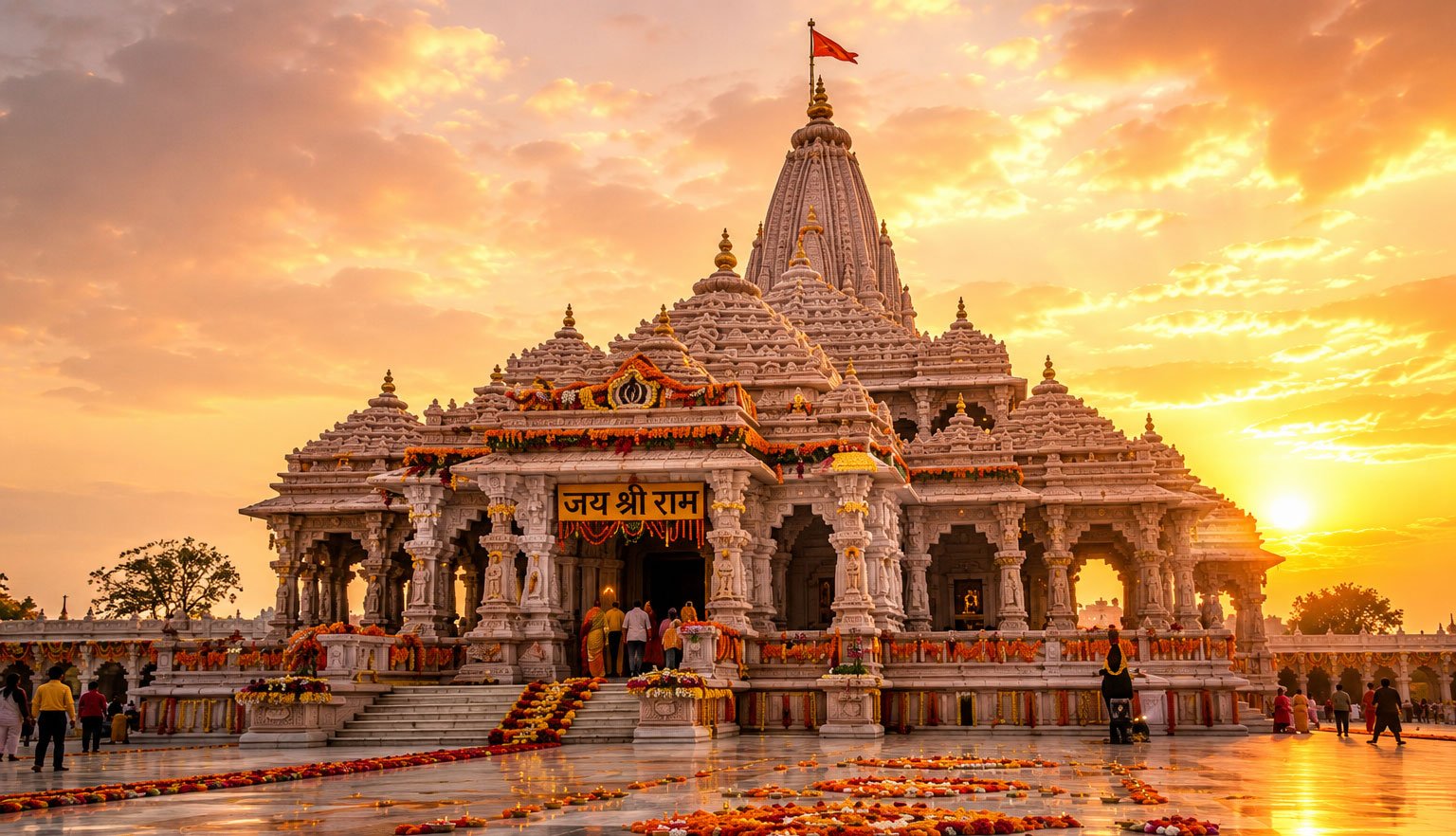
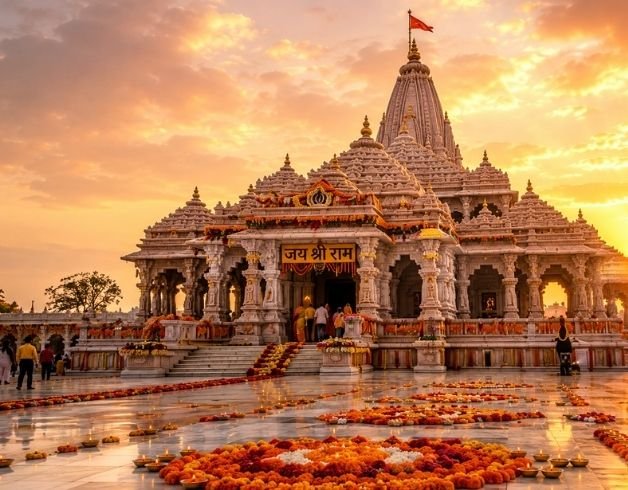
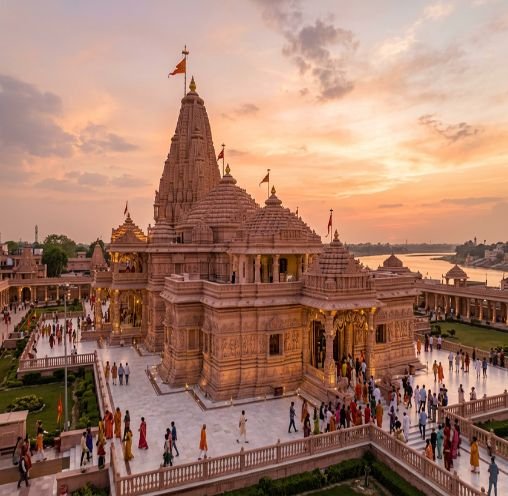
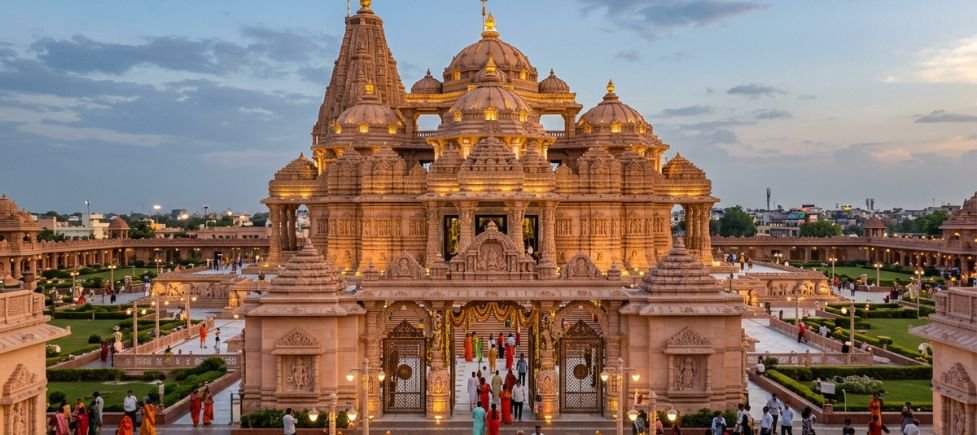



The world’s one of the most esteemed Hindu temples, Ram Mandir Ayodhya, which is not just a place of worship but a living embodiment of faith, devotion, tradition, and national identity. The temple stands at the birthplace traditionally considered to be that of Lord Shri Ram, the seventh incarnation of Lord Vishnu, in the holy city of Ayodhya in Uttar Pradesh. The temple dedicated to Ram in Ayodhya attracts millions of devotees every year who come here seeking blessings, going through the grandiose attraction of the temple, and enjoying the spiritual aura that has always been associated with Lord Ram.
The opening of the grand Ram Mandir is a milestone event in Indian history. At present, this temple is one of the most frequently visited pilgrimages in India, and numerous pilgrims come even from abroad along with tourists, researchers/scholars, and architecture lovers.
This full guide provides all you need to know about Ram Mandir Ayodhya: its history, architecture, darshan timings, VIP darshan facilities near attractions, travel information, and visitor guidelines.
History of Ram Mandir Ayodhya
Ayodhya, one of the seven sacred cities in Hinduism, has been mentioned numerous times across ancient scriptures, including the Ramayana, Skanda Purana, Atharva Veda and other religious texts.
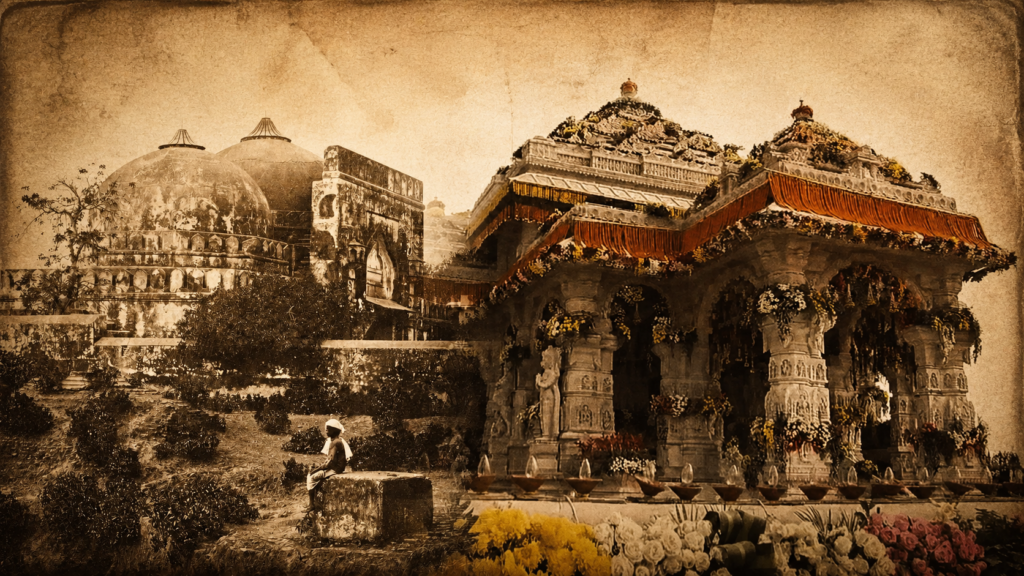
Ayodhya, famous for being the birthplace of Lord Ram, formerly served as the capital of one branch of the Ikshvaku dynasty according to Hindu tradition. The site had been one of the most sacred spots in India for worshipers for centuries. This was also the place where, in accordance with historical evidence supported by religious text and local traditions of which there were ample records, Ram Janmabhoomi—Lord Ram’s birthplace.
For centuries, the site continued to be a center of religious importance. Eventually, ownership and religious claims to the land came into dispute. This issue then received considerable attention in the courts. The Ram Mandir was built following a historic 2019 order of the Supreme Court of India.
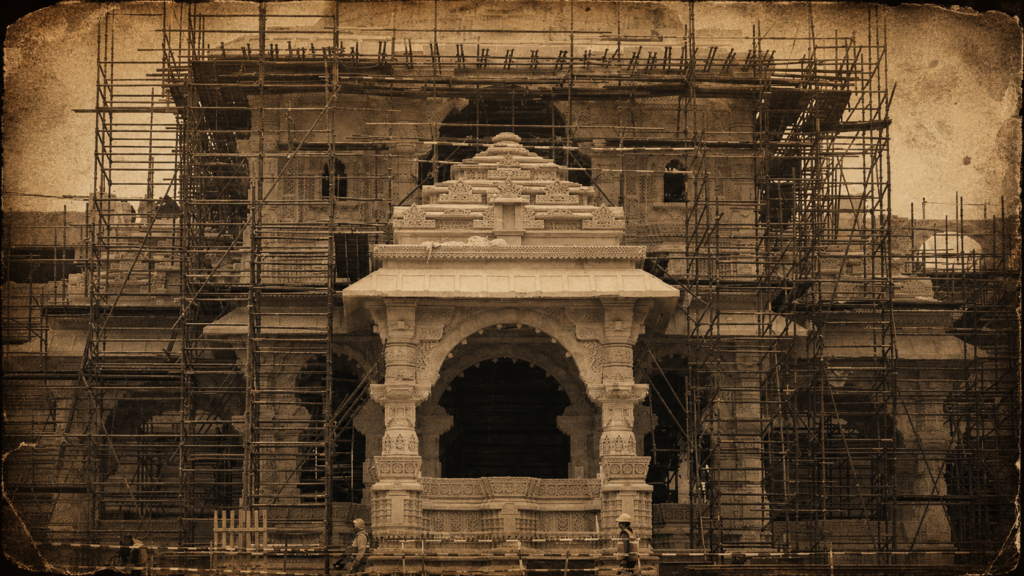
The Bhoomi Pujan to start the temple construction was held on 5 August, 2020. After this, the Pran Pratishtha of Ram Lalla was conducted in Jan 2024 and gave rise to vibrations transcending across the world, bringing everyone together at a single place where millions gather & worship – the temple.
Major Milestones
| Year | Event |
| Ancient Period | Ayodhya is recognised as the birthplace of Lord Ram |
| Medieval Era | Historical transformations at the sacred site |
| 1949 | Appearance of Ram Lalla idols at the disputed location |
| 2019 | Supreme Court verdict |
| 2020 | Bhoomi Pujan ceremony |
| 2024 | Pran Pratishtha of Ram Lalla |
The completion of the temple represents not only a religious achievement but also the preservation of a cultural legacy that spans thousands of years.
Architectural Excellence of Ram Mandir
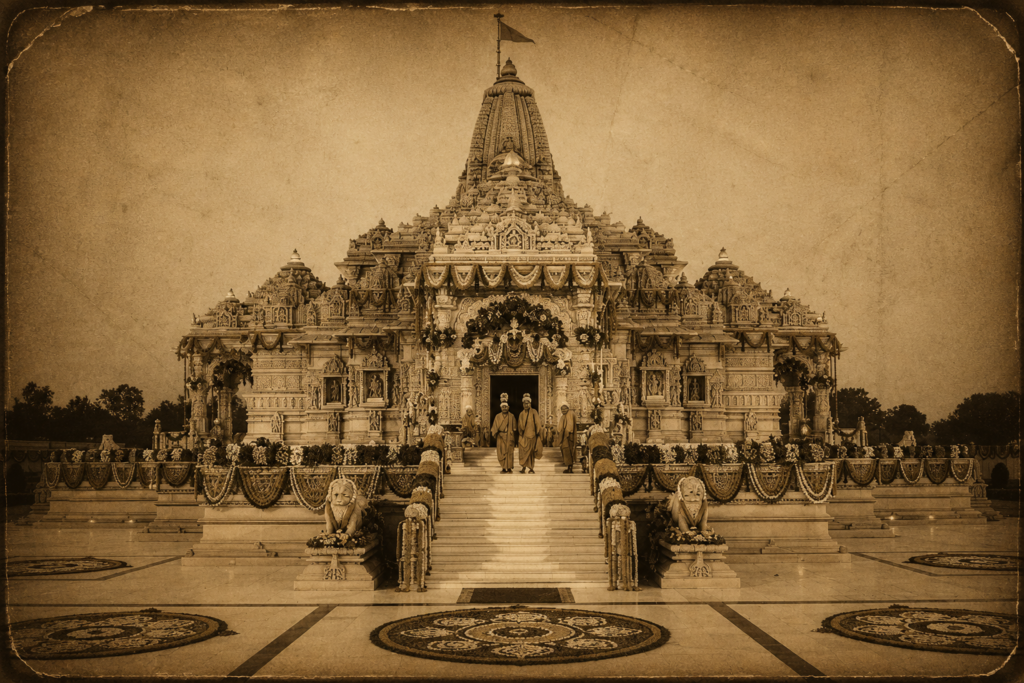
This structure is a specimen of an ancient Indian temple building. Implements much like that of Nagara Architecture, a classical architecture type found in almost all temples across North India.
This temple was designed with intricate detail, combining ancient methods of construction with modern engineering principles to survive centuries without compromising safety and structural integrity.
Architectural Highlights
- Traditional Nagara style
- The temple building comprises three storeys
- Built up of pink sandstone
- Steel not used in the main temple building
- The temple foundations are quake-resistant
- Headed by the fine, detailed carving of the story from the Ramayana
- Is two gateways at the temple entrance
- The prayer halls and mandapas are large and airy
- The sanctum sanctorum is outstanding
The temple has been designed to accommodate millions of visitors annually while preserving the sanctity of worship.
Temple Dimensions
| Feature | Details |
| Length | Approximately 380 feet |
| Width | Approximately 250 feet |
| Height | Approximately 161 feet |
| Floors | 3 |
| Pillars | More than 390 |
| Gates | More than 40 |
Each pillar contains detailed carvings representing divine figures, mythological narratives, floral motifs, and symbolic designs inspired by ancient Hindu art traditions.
The Ram Lalla and the Sanctum Sanctorum
The Holy of Holies is the Garbhagriha or sanctum sanctorum where Ram Lalla resides.
The idol is of Lord Ram in his Choto avatar, and emanated divine peace and grace. Carved and sculpted with astonishing artistry, the idol now serves as the spiritual focal point of a temple.
It is configured according to Vastu Shastra and ancient temple-drilling norms. Existing substrates, such as natural lighting and sacred geometry, along with correct orientation, drive the spirituality felt by pilgrims.
Visitors say the most memorable part of their pilgrimage is observing Ram Lalla’s darshan.
Ram Mandir Darshan Timings
Thousands of pilgrims troop to the temple every day. Knowledge about the darshan schedule of devotees allows visitors to better organise a trip.
General Darshan Schedule
| Activity | Timing |
| Temple Opening | Around 6:30 AM |
| Morning Darshan | 7:00 AM onwards |
| Afternoon Session | According to the temple schedule |
| Evening Darshan | Reopens later in the day |
| Temple Closing | Around 9:00 PM |
Timings during festivals, major religious occasions, and special functions are subject to change.
Arrive in advance on weekends and holidays for minimal queues.
Daily Aarti Schedule
The temple carries out many holy ceremonies every day.
- Mangala Aarti
- The early morning ceremony that wakes the deity up and starts daily worship.
- Shringar Aarti
- Clothing, ornaments, and flowers are offered to the deity before devotees have darshan.
- Bhog Aarti
- The second type of act takes place when offerings of food are ceremonially presented to Ram Lalla.
- Sandhya Aarti
- Taking place during sunset, this aarti builds an intensely spiritual environment within the premises of the temple.
- Shayan Aarti
- The last puja of the day before the deity returns to its night resting place.
These ceremonies take place so that the devotees can partake in witnessing traditional temple puja and pradakshina (circumambulation).
VIP Darshan at Ram Mandir
Because of this great number, usually special arrangements for easier access are possible.
Benefits of VIP Darshan
- Faster entry
- Reduced waiting time
- Organised queue management
- Improved convenience during peak seasons
- Better crowd control
Depending on temple administration policies and visitor numbers, VIP arrangements are subject to change.
Visitors should consult the present guidelines before arranging their visit.
Online Registration and Darshan Booking
Modern amenities have eased the pilgrimage process.
Steps for Registration
- Access the official booking portal.
- Select a preferred date.
- Enter visitor information.
- Complete verification requirements.
- Receive confirmation details.
Digital systems improve visitor experience and help in crowd management.
Best Time to Visit Ram Mandir
While visitors can tour the temple year-round, there are seasons that present a more pleasant touring experience.
October to March
This time of year is thought to be ideal because the climate and weather are great. Visiting becomes easier, in particular for seniors or family groups.
Advantages
- Cooler temperatures
- Comfortable walking conditions
- Better travel experience
- Ideal for exploring nearby attractions
Visiting During Festivals
Ayodhya Turns Into a Spiritual Hub During Festivals
- Ram Navami
- Lord Ram’s birth anniversary draws in massive throngs and dedicated celebrations.
- Diwali and Deepotsav
- Ayodhya is decorated with thousands of lamps, and it looks magnificent.
- Makar Sankranti
- It is attended by thousands, including religious rituals and a holy bath.
- Kartik Purnima
- A significant events that involve praying and spiritual group activities.
If you’re thinking of heading out for the festival, it’s best to book your accommodation in advance.
How to Reach Ram Mandir Ayodhya.
Ayodhya was previously known for the slow rates of infrastructure and transportation, but with developments, Ayodhya has emerged as a notable destination because travelling to Ayodhya is now easier than any other time.
By Air
The city is connected by a state-of-the-art international airport with flights from prominent Indian cities.
Major Connected Cities
- Delhi
- Mumbai
- Bengaluru
- Hyderabad
- Kolkata
- Ahmedabad
By Train
Ayodhya Dham is the main railway station serving Ayodhya.
Trains connecting major destinations from Ayodhya and vice versa are regular.
Popular Rail Connections
- Delhi
- Lucknow
- Varanasi
- Prayagraj
- Mumbai
- Kolkata
By Road
It is well connected via an excellent network of highways.
Nearby Cities
| City | Approximate Distance |
| Lucknow | 135 km |
| Prayagraj | 170 km |
| Varanasi | 220 km |
| Gorakhpur | 140 km |
Road travel offers flexibility and allows visitors to explore surrounding attractions.
Nearby Attractions in Ayodhya
Pilgrimage to Ayodhya is shared with niyamas viewed as recuperating spots; Aniduo
- Hanuman Garhi
- Also known as one of the most important temples in Ayodhya (dedicated to Lord Hanuman). Before moving towards Ram Janmabhoomi, pilgrims traditionally come to Hanuman Garhi.
- Kanak Bhawan
- It has beautiful idols of Lord Ram and Goddess Sita, with silver designs adorning the entire temple and is also known for its attractive architecture.
- Ram Ki Paidi
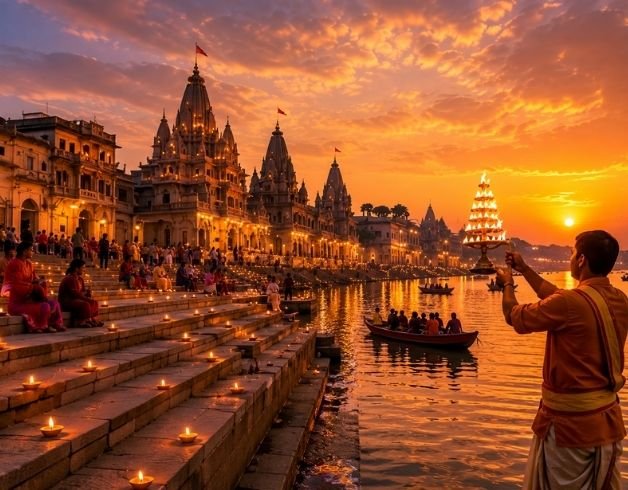
- The holy riverfront area on the banks of the Saryu River. Its use is particularly prominent in evening prayers and on occasions.
- Nageshwarnath Temple
- An ancient, historic and highly religiously significant temple of Shiva
- Guptar Ghat
- An esteemed place where Lord Ram is said to have last departed in human form.
- Saryu River
- In fact, the sacred river is one of those lifelines that gives life and meaning to Ayodhya as a holy town where thousands come by hoping to purify themselves in it.
Accommodation Near Ram Mandir
A selection of accommodation options is available to guests.
- Budget Hotels
- Perfect for pilgrims searching for budget stays with basic amenities.
- Mid-Range Hotels
- Ideal for families and travellers who want comfortability and convenience.
- Luxury Hotels
- Premium- Premium accommodation includes better facilities, modern amenities & superior hospitality offerings.
- Dharamshalas
- You will find low-priced accommodation for pilgrims at regular lodging centres.
- It is advisable to book accommodation well in advance, especially during the festivals and weekends.
Facilities Available at Ram Mandir
Here, the administration of the temple has constructed many facilities for comfortable accommodation to pilgrims.
Available Amenities
- Drinking water stations
- Medical services
- Information centers
- Wheelchair accessibility
- Security checkpoints
- Rest areas
- Washrooms
- Parking facilities
- Cloakrooms
- Lost-and-found assistance
These services add a lot to the convenience of pilgrims.
Important Guidelines for Visitors
Visitors are expected to adhere to all directions issued in order to preserve the sanctity of the temple and facilitate orderly functioning.
Recommended Practices
- Dress modestly and respectfully.
- Follow security instructions.
- Maintain cleanliness.
- Respect religious customs.
- Keep personal belongings secure.
- Arrive early during busy periods.
- Follow designated queue systems.
Following these rules helps in making everyone live peacefully and organised.
Pre-Book Your Ram Mandir Ayodhya Tour with Trip My Ayodhya
For a stress-free and arrangement-free journey, you may pre-book your entire tour program in Ayodhya here with Trip My Ayodhya.
Advantages of booking through Trip My Ayodhya
- Complete planning arrangement for travelling (accommodation+transit+darshan help)
- Guided temple tours
- Aid to book Aarti & Sugam Darshan
- Leisure and a safe journey
- Arrangements according to needs
- Customer support service 24*7
Make bookings for travel by contacting
📞 Call Us: +91 7078723132 |+91 9557104160
📲 WhatsApp Us: +91 7078723132 |+91 9557104160
🌐 Visit Our Website: Trip My Ayodhya | Trip My Ayodhya
🔗Explore all our packages here 👉 View All Packages
🔗 Read Our Blogs for Travel Inspiration: Trip to Ayodhya blog
Whether you are traveling alone, with family, or in a group, through Trip
Spiritual Importance of Ram Mandir
The Ram Mandir is seen as embodying the eternal attributes of Lord Ram: truthfulness, righteousness, compassion, courage discipline and devotion to duty.
For devotees, this temple means more than a place to worship. A place where faith, culture and history meet that breathes spirituality. The temple is a reminder of the principles that generations have followed through what they learned in the Ramayana.
Many pilgrims describe their visit as a life-changing event that helps them connect on deeper levels with the divine in whatever form it takes for them and makes way for internal contemplation.
The aura of Ram Lalla, the sanctity enveloping it, the bhajans and kirtans reverberating within its precincts, along with architectural splendour sets up an ambience which no other pilgrimage place can match.
Conclusion
Background Ram Mandir Ayodhya is among the most brilliant religious and cultural monuments of Modern India. As a result of this, it is one of the holy pilgrimage sites for millions due to its deep historical roots and majestic Nagara-style architecture, along with exceptional spiritual ambience and international-standard visitor amenities.
Be it for darshan, architectural appreciation, cultural exploration or spiritual fulfilment, the temple will never disappoint you, and that makes this all matter, being a centuries-old devotional hub. With Ayodhya transforming into a global pilgrimage & Heritage Hub, Ram Mandir continues to lead at the forefront of this subconscious city, as an eternal symbol of faith, tradition and DIVINE GRACE
Frequently Asked Questions (FAQs) About Ram Mandir Ayodhya
1. What is the price of a VIP pass in Ayodhya Ram Mandir?
Currently, there is no permanent VIP pass system yet openly declared for general devotees at Ram Mandir Ayodhya. At times, special darshan can also be available according to temple administration guidelines, any unique event or government guidelines. Visitors should check with the official temple authorities for up-to-date information before making their plans.
2. How to do VIP Darshan at Ram Mandir, Ayodhya?
There are times when VIP Darshan can be arranged by temple administration, but typically, you will have to get special permissions. Visitors should:
Stay tuned to the temple portal for fresh news.
Follow current temple guidelines.
Carry valid identification documents.
If you are travelling during peak pilgrimage seasons, it may make sense to arrive early.
Ask trusted information centres for help.
Because policies may change based on crowd control, visitors should check the latest guidelines prior to visiting
3. What kind of food is Ayodhya famous for?
Ayodhya is famous for its traditional veg and prasadam food. Popular local delicacies include:
Kachori Sabzi
Bedai Puri
Aloo Ki Sabzi
Jalebi
Rabri
Malpua
Lassi
Khasta Kachori
Chaat
Temple Prasad
A large number of visitors savour sattvic meals offered at temples, dharamshalas and raw outlet kitchens throughout the town.
4. Is online booking available for Ram Mandir Darshan?
Yes. For some services, special darshan arrangements and to ensure crowd management, it may offer online registration facilities. Visitors must always use the official channels to get real-time info on bookings as they aren’t too reliable at times.
5. What is the best time to visit Ram Mandir Ayodhya?
Timing is important here, you should ideally visit it between October and March when the weather remains pleasant and comfortable to do sightseeing & pilgrimage activities.
6. Can mobile phones be carried inside the Ram Mandir?
Mobile phones, cameras and electronic devices are typically prohibited in some places within a temple for security reasons. However, visitors will be asked to adhere to the latest security guidelines on the temple compound.
7. Is there a dress code for Ram Mandir?
There is no formal wardrobe policy, but visitors are asked to dress conservatively, traditionally and respectfully for a religious site.
8. Which is the nearest railway station to Ram Mandir?
The nearest major railway station to Ayodhya Dham Junction is connected with important cities like Delhi, Lucknow, Varanasi, Mumbai and Prayagraj.
9. Which airport is nearest to Ram Mandir Ayodhya?
Nearest Airport: Maharishi Valmiki International Airport, Ayodhya Dham, which connects a few major Indian cities and is expanding its international operations.
10. What are the main attractions near Ram Mandir?
Popular attractions include:
Hanuman Garhi
Kanak Bhawan
Ram Ki Paidi
Nageshwarnath Temple
Guptar Ghat
Saryu River
11. Why is the Ram Mandir in Ayodhya important?
Ram Mandir is (currently under construction) at the place that has traditionally been identified as Lord Shri Ram’s birthplace. It stands for faith, and devotion, along with being a blend of rich culture that will not only remind you about Ramayana — the epic saga highlighting good over evil through righteousness, duty to humanity, compassion among humans (and animals) and truth. It is one of the most sacred pilgrimage destinations on earth for millions.







2 Comments
[…] Shree Ram Janmabhoomi […]
[…] 👉Ram Mandir Ayodhya Guide 2026: Amazing History, Timings & VIP Darshan Secrets […]