
TRAVEL GUIDE•Travel Guide•UPDATED NOV 2026

Shopping in Ayodhya - What to Buy, Best Markets & Scam Alerts

By Rohit•19 Nov 2026
Shopping in Ayodhya - What to Buy, Best Markets & Scam Alerts
Quick Answer

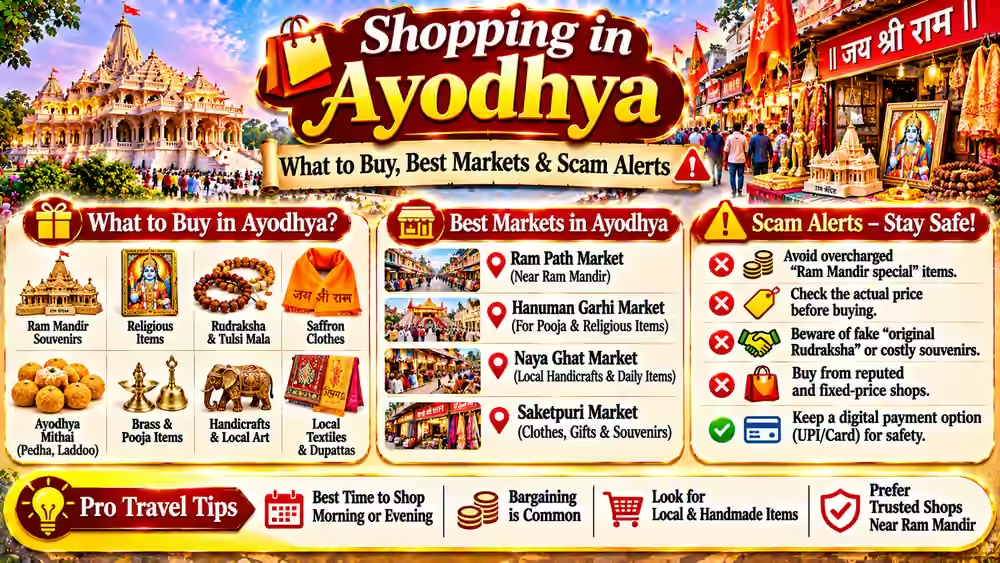
The best things to buy in Ayodhya are Brass or Marble Ram Darbar idols, authentic Rudrakshas, Chunri for the deity, and the famous Ayodhya Peda. You will find the largest concentration of shops near the Ram Mandir entrance, Ram Path, and Naya Ghat. However, you must be careful with high-priced items like Rudraksha, as fake items are sold to tourists. Always bargain, and prefer shops that offer fixed prices or government certifications.

Quick Enquiry

I'm Rohit and for eight years, I have been taking people around the busy streets of Ayodhya. Usually, when the guests of mine finish the darshan of Ram Lalla, the first thing they ask is, "Where can I go to shop and what do I need to purchase?" (Bhaiya, ghoomne ke liye market kahan hai aur kya khareedna chahiye?) Ayodhya is more than a holy city; it is an ideal shopping destination for those who wish to purchase items related to their faith.
The streets near the Ram Mandir are crowded with businesses selling products such as large brass statues and inexpensive plastic toys. As with many other significant religious centers, some stores sell authentic products, while others have vendors who will attempt to capitalize on your loyalty to their product. This guide is my honest opinion of what to purchase in Ayodhya, how to identify fake products, and where to buy products at the lowest prices.

1. Ram Darbar Idols (The Classic Souvenir)

You cannot depart from Ayodhya until you have purchased a Ram Darbar. A Ram Darbar is either a statue or an image (framed) which represents Lord Rama, Sita, Lakshman, and Hanuman.
What to Look For:
  • Brass (Ashtadhatu): This is a very heavy, strong and attractive material. You will find that these items come in many different sizes. Some are small enough to carry around with you in your pocket (these cost about ₹500 to ₹1000). Other items can be displayed as art pieces, which cost about ₹5000 or more.
  • Marble: The white marble statues created by local artists are also extremely popular. These statues weigh less and are much easier to transport back to your residence.
  • Framed Photos:: For those of you who will be flying to your destination with limited baggage weight allowances, the beautifully framed photos of the Ram Mandir or Ram Darbar can make for a wonderful lightweight gift.
My best advice is: When purchasing brass, look at how much it weighs and how well finished it is. Many of the lower-priced brass statues will be very rough around the edges. Find out if the seller includes a polishing cloth when you buy.

2. Rudraksha: The Good, The Bad, and The Fake

Rudraksha beads are very popular, however, this is where most of the scams occur. Framed Photos: Every shop will tell you they can provide you with a "Nepal" or "1-Mukhi" (one face) Rudraksha that has special abilities. Be realistic.
The cost of a real 1-Mukhi Rudraksha is hundreds of thousands of rupees. If you are buying a 1-Mukhi Rudraksha from someone who is charging you less than ₹5,000, then it's a 100% fake. Fake Rudrakshas are typically made of plastic, wood or compressed powder.
Framed Photos:
  • 5-Mukhi and 7-Mukhi: These are common and relatively inexpensive (₹100–₹500).
  • Rudraksha Malas: A full mala of 108 beads is a great buy. Check the surface; real beads have natural grooves and a slightly uneven texture, not a perfectly smooth, uniform plastic finish.
My Top Tip: purchase Rudraksha beads from reputable Government Emporiums or stores that are located close to the Temple instead of purchasing them from hawkers on the street.

3. Chunri and Puja Samagri

If you intend to participate in a puja (worship service) or would like to provide an offering to the deity, purchasing a Chunri will be necessary.
  • Chunri: A red or pink cloth with gold-colored borders and mantras printed on it. You can offer it at the temple, and then take it home as a blessed item. Prices range from ₹100 to ₹1,500 depending on the fabric and embroidery.
  • Puja Kits: If you are doing a specific puja, you can buy ready-made kits containing Roli, Chawal, Agarbatti, and Diyas.

4. Ayodhya Peda: The Local Sweet

The most famous peda is likely Mathura peda. However, Ayodhya has a similar product that is just as tasty as the other one.
  • Why it's different: Ayodhya Peda is generally prepared using pure desi ghee and khoya. It is slightly smaller, and has a rich, melt-in-the-mouth consistency.
  • Where to find: Near the Hanuman Garhi Temple. Most people say that Ram Bhandar is the best place to buy peda from. However, if you are looking for fresh pedas, then most of the other fresh sweets shops located in the main market will sell you quality pedas.
  • Warning: During the hot summer months, peda may go bad very fast. Make sure that you use a quality food grade container to store peda.

5. Wooden Handicrafts and Toys

Ayodhya is also known for its traditional wooden toys and carved souvenirs.
  • You'll find detailed hand carved wood temples, decorated elephants, and old-fashioned children's wood toys.
  • Most of these items are produced by residents of the surrounding communities. These items will be excellent, lightweight presents for family members living elsewhere.

Where to Shop in Ayodhya

  1. Ram Path and Ram Mandir Marg:- The primary road to the temple has become a major commercial center. Thousands of stores sell religious items used during worship services, statues of deities, and clothing. Be prepared for crowds and to negotiate prices when you shop.
  2. Naya Ghat Market:- To find local clothing, bracelets, and traditional worship items, go to Naya Ghat. This is where you will find a more traditional atmosphere than in other parts of the city.
  3. Government Emporiums:-The Uttar Pradesh Handicrafts emporiums (UP Handloom) can be found throughout the city. While prices are fixed (and as such, you will not have an opportunity to bargain), you can rest assured that you will receive authentic, quality products and avoid getting ripped off.

3 Rules to Avoid Getting Scammed

  1. Do Not Buy "Magic" Items: If a vendor tells you a stone or a bead will miraculously solve your life’s problems for a steep price, walk away. Devotion is different from superstition.
  2. Bargain Hard: Unless you are in a fixed-price government store or a premium branded shop, never pay the first quoted price. If they ask for ₹1,000 for a brass idol, start your negotiation at ₹400.
  3. Check for 'Made in China': A lot of cheap plastic toys and decorative items look religious but are imported. If you want a real Ayodhya souvenir, look for local artisan work, which will have slight imperfections and a unique feel.

Conclusion

The shopping experience in Ayodhya is more than simply buying things. It's an opportunity to carry a part of the Ram Janmabhoomi back with you. Each object (e.g., a miniature brass Ram Darbar, a blessed Chunri, or a box of fresh pedas) has its own tale. Make wise choices, stay away from the fake Rudrakshas and don't hesitate to negotiate gently. Listen to the tales of the shopkeepers. Relax and enjoy the spiritual atmosphere and create memories that will endure long after you've used up the souvenirs. Jai Shri Ram.

Plan Your Ayodhya Trip

Need help finding authentic local shops, or want a private cab to take you around the markets? We handle the logistics so you can focus on your shopping and darshan.
📞 Call Us: +91 7078723132 | +91 9557104160
📲 WhatsApp Us: +91 7078723132 | +91 9557104160
Hours: 8 AM to 9 PM daily
Our Services:
  • Ayodhya Tour Packages & Guided Shopping
  • Private AC Cabs for Temple & Market Hopping
  • Hotel Bookings in Ayodhya
  • Sugam Darshan Pass Assistance
  • Customized Itineraries for Families & Groups

Sources & Travel Information

Written by: Rohit•Last reviewed: 20 November 2026
Editorial Review

Important Travel Note: Temple timings, parking fees, local transport prices, entry arrangements, and traffic restrictions may change during festivals, holidays, or special events. Please confirm the latest information with the relevant authority before travelling.

PLAN YOUR VISIT WITH LOCAL EXPERTS

Ready to Plan Your Sacred Ayodhya & Varanasi Yatra?

Get customized itineraries with dedicated private AC cabs, verified hotel stays, and temple timing coordination.

Plan Your Journey →
Rohit
🏛️Resident Pilgrimage GuideView Profile →

Rohit

8+ Years on Ground

🛕Founder & Senior Pilgrimage CoordinatorAyodhya & Varanasi Resident Guide

Rohit is the Founder of Trip My Bharat Network with over 8+ years coordinating pilgrimages through the sacred shrines of Ayodhya, Varanasi, Prayagraj, and Gaya. He specializes in verified temple schedules, sthala purana documentation, and crowd-safe darshan planning.

Founder, Trip My Bharat Network
8+ Years Local Pilgrimage Experience
Resident Route Planning
Seasonal Darshan Details Reviewed
HAVE A QUESTION ABOUT THIS ROUTE?Ask Rohit on WhatsApp
Direct pilgrimage advice • Zero obligation
FREQUENTLY ASKED QUESTIONS

Frequently Asked Questions About Shopping in Ayodhya

Verified answers from local pilgrimage guides for peaceful temple darshans, timings, and transportation.

QWhat is the best thing to buy in Ayodhya?▼
A brass Ram Darbar idol and the local Ayodhya Peda.
QAre there any shopping malls in Ayodhya?▼
No, Ayodhya is mostly a traditional market town. However, there are a few modern shopping complexes and souvenir shops opening up near the Ram Mandir path.
QCan I buy original Rudraksha in Ayodhya?▼
Yes, but you must be careful. Stick to 5-Mukhi or 7-Mukhi beads from reputable shops. Avoid buying extremely expensive, rare beads from street vendors.
QIs bargaining allowed in Ayodhya markets?▼
Yes, absolutely. In the local bazaars and street stalls, bargaining is expected. However, do not bargain aggressively for items that are already very cheap (like a ₹20 packet of agarbatti).
QDo shops accept UPI or Cards?▼
Most shops near the Ram Mandir accept UPI (GPay, PhonePe). However, small vendors and local artisans might prefer cash. Keep some cash handy.
QWhat is the best time to shop in Ayodhya?▼
Early morning (8:00 AM to 11:00 AM) or late evening (5:00 PM to 8:00 PM) is the best time. Avoid the afternoon heat and the peak crowd hours.
QWhere can I buy puja items for the temple?▼
You will find thousands of shops lining Ram Path leading up to the temple. You can also buy standard puja kits right outside the entry gates.
QWhat is the price of a Ram Darbar idol?▼
A small brass idol starts around ₹500. A large marble or Ashtadhatu idol can cost anywhere from ₹3,000 to ₹15,000 depending on the craftsmanship.
QAre wooden toys safe for kids?▼
Yes, but check for rough edges or toxic paints. Buy from reputable toy shops rather than street hawkers.
QCan I get a Chhatri (umbrella) for the deity?▼
Yes, beautifully decorated Chhatris, along with Chowri (peacock feather fans), are widely available in the market.
QWhat is the shelf life of Ayodhya Peda?▼
Because it is made of khoya and ghee, it stays fresh for about 4-5 days. If you are traveling far, ask the shopkeeper to pack it securely for transit.
QAre there any local clothes or sarees to buy?▼
Yes, you can buy simple cotton sarees, Chunris, and local handloom fabrics in Naya Ghat market.
QDo I need a guide to go shopping?▼
Not necessarily. Shopping in Ayodhya is straightforward. However, having a local guide (like me) can help you find the best artisans and save you from overpaying.
QCan I buy items in bulk for a pooja at home?▼
Yes. If you are hosting a pooja, the wholesale markets near Holi Gate are great for buying dry fruits, sweets, and bulk puja items at discounted rates.
QAre there any restrictions on carrying religious items in flights?▼
Brass and marble idols are fine in checked baggage. However, if you are carrying any liquids (like Gangajal or scented oils), ensure they are properly sealed and under the 100ml limit for carry-on bags.
QWhat is the significance of buying a Chunri?▼
A Chunri is a symbol of respect and devotion. Offering it to the deity and then bringing it home is believed to bring blessings and prosperity.
QWhat are some good gifts for kids?▼
Wooden toys, small Hanuman gadas (maces), and illustrated storybooks of the Ramayana are great gifts for children.
QIs it safe to shop at night in Ayodhya?▼
The main Ram Path and temple areas are highly secured and safe at night. However, avoid wandering into dark, narrow lanes alone after 10 PM.
QHow do I know if an item is actually handmade by local artisans?▼
Local handicrafts often have minor imperfections. Look for GI-tagged items or visit the UP Handicrafts emporium.
QCan I buy original Shaligram stone in Ayodhya?▼
Shaligram stones are usually found in Nepal and the Gandaki River. You can buy them in Ayodhya, but authenticity is a major concern. Ensure you buy from a highly trusted priest or certified store.
EXPLORE MORE GUIDES

More Useful Reading for Your Yatra

View All Articles
How to plan a comfortable family visit to Bharat Kund
📖Pilgrim Guide
23 Nov 2026
Verified Guide

How to plan a comfortable family visit to Bharat Kund

Planning a comfortable Bharat Kund family visit is highly recommended for those seeking a peaceful escape from the crowds of Ayodhya. Located about 20 km away in Nandigram, this site is deeply significant as the place where Bharat ruled with Lord Ram's sandals for 14 years. To ensure comfort, hire a private cab from Ayodhya for the 2-3 hour round trip rather than relying on crowded public buses. The site is open daily from around 5:00 AM to 8:00 PM with free entry. Visit early in the morning or late afternoon to avoid the heat, and don't miss the serene evening aarti at the kund around 5:00 PM. Keep a close watch on children near the deep water, wear easy-to-remove footwear, and prepare for a truly serene family outing.

Varanasi with Kids and Elderly - A Practical Family Travel Guide
📖Pilgrim Guide
22 Nov 2026
Verified Guide

Varanasi with Kids and Elderly - A Practical Family Travel Guide

aking kids and elderly parents to Varanasi is completely doable, but it requires a change in strategy. Forget the backpacking rush; you need a slow, comfortable pace. The absolute best way to see the city is by taking early morning and evening boat rides, which let you avoid the chaotic, narrow lanes. Stay in the quieter areas like Assi Ghat or the Cantonment, where cars can actually reach your hotel. When visiting the Kashi Vishwanath Temple, book the official Sugam Darshan ticket online to skip the massive general queues and use the free wheelchair services if needed. Avoid the peak summer heat, carry easy-to-slip-off footwear, and do not force anyone to walk up to the cremation ghats if they are uncomfortable.

Common Varanasi Trip Mistakes & Scam Alerts - What to Avoid
📖Pilgrim Guide
21 Nov 2026
Verified Guide

Common Varanasi Trip Mistakes & Scam Alerts - What to Avoid

Best Places to Visit in Ooty with Family: The Complete GuideTo avoid scams in Varanasi, never pay for "VIP darshan" at Kashi Vishwanath (general entry is free), refuse boat rides where the price changes mid-river, and ignore auto drivers who claim the temple is closed. Culturally, never photograph the cremation ghats at Manikarnika, dress modestly for temples, and expect crowded, chaotic lanes. Book hotels in the Cantonment area if you have heavy luggage, as vehicles cannot reach most ghat-side properties. For a safe, verified Varanasi trip, contact Rohit Singh at 7078723132.