Namaste. My name is Rohit, and I am a guide. The past 8 years I have been serving as a guide for the pilgrIMS. Almost all week people call me and have the same question: "Bhaiya, Varanasi aur Ayodhya Kab Jaana Chahiye? When to visit Varanasi and Ayodhya, sir?"
My answer will not only depend on the weather conditions. It will depend on how a pilgrim is going to make the best of the pilgrimage. Are you going to enjoy grand festivals, want calm darshan, are you willing to escape the crowd, or maybe you are thinking about how to stay on the ghats without sweating?.
Over these years I have been guiding groups of families as well as elderly people and solo travellers through both cities during every season. I know from what I have experienced what has worked and what has not worked. This guide presents you a true-month-by-month scenario for both Varanasi and Ayodhya. This is just so that you can make the necessary choice of the time window of your visit.
Now, without further ado let us start.
Best Time at a Glance
| Question | Straight Answer |
|---|---|
| Best overall window | October to March |
| Best single month | November |
| Best for festivals | November (Deepotsav, Dev Deepawali) |
| Best for thin crowds | Late January, early September |
| Best for calm darshan | February and March |
| Best days of the week | Tuesday to Thursday |
| Avoid if possible | May and June (40–45°C), mid-July to late August (heavy rain) |
| Ideal temperature range | 8°C to 28°C |
Why October to March Is the Ideal Window
Both Varanasi and Ayodhya sit in the plains of Uttar Pradesh, so they share nearly identical weather patterns. The window from October to March is when the climate is genuinely cooperative.
What Makes It Work:
-
Temperatures stay between 8°C and 28°C — cool enough to walk the ghats and temple lanes for hours without fatigue
-
The monsoon has retreated — no rain, no humidity, no muddy lanes
-
All temples and ghats are fully accessible — no closures due to flooding
-
The Ganga and Saryu are calm — boat rides are safe and pleasant
-
The festival calendar is at its richest — Diwali, Deepotsav, Dev Deepawali, and Kartik Purnima all fall in this window
What This Means for Your Trip:
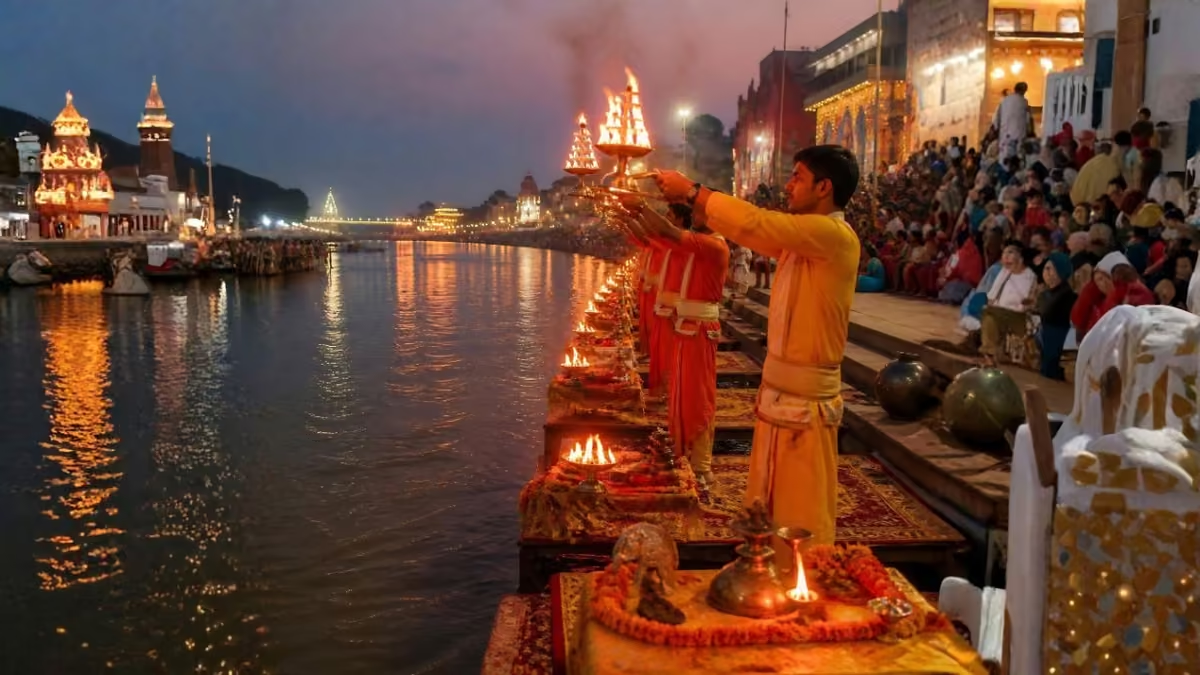
You can plan a full day of darshan without worrying about heatstroke. You can sit at Dashashwamedh Ghat for the Ganga Aarti without being drenched in sweat. And you can walk the parikrama in Ayodhya with your family, including elders and children.
Month-by-Month Weather and Crowd Guide
Here is the complete month-by-month picture for both Varanasi and Ayodhya.
| Month | Avg Temp (°C) | Crowd Level | Verdict |
|---|---|---|---|
| January | 8–22°C | Moderate–High | Excellent. Cool days, foggy mornings |
| February | 11–25°C | Moderate | Excellent. Mild, comfortable |
| March | 16–31°C | High (Ram Navami) | Good, but crowds build |
| April | 22–38°C | Low–Moderate | Hot. Mornings only |
| May | 28–44°C | Very Low | Avoid if possible |
| June | 30–45°C | Very Low | Avoid if possible |
| July | 26–35°C | Low | Monsoon. Humid, slippery |
| August | 25–33°C | Low | Heavy rain. Quiet but risky |
| September | 25–33°C | Low–Moderate | Rain receding. Improving |
| October | 20–32°C | Moderate | Very Good. Post-monsoon clarity |
| November | 16–29°C | High (Festivals) | Best month |
| December | 11–24°C | Moderate–High | Excellent. Cool and pleasant |
Source:
The Best Month for Festivals – November
November is the single best month to visit Varanasi and Ayodhya.
Why November Wins:
-
Weather: Temperatures range from 16°C to 29°C. Cool mornings, pleasant days, no humidity
-
Dev Deepawali: Varanasi celebrates the Diwali of the Gods on November 24, 2026, with over 11 lakh diyas lighting up all 88 ghats
-
Deepotsav: Ayodhya celebrates its grandest festival from November 6 to 8, 2026, with around 30 lakh earthen lamps lit along Ram Ki Paidi on November 7
-
Kartik Purnima: Both cities observe this sacred full moon day with special aartis, snans, and rituals
-
The spiritual atmosphere: The entire region is charged with devotion. The ghats glow. The temples are alive
What to Expect:
-
Crowds: High, especially around Diwali and Dev Deepawali
-
Prices: Hotels and transport surge by 30–50%
-
Booking: Book at least 2–3 months in advance
Local Tip: If you want the festival experience without the peak crowds, visit in the first week of November or the last week of November — just before or after the main festival rush.
Varanasi’s Dev Deepawali – November 24, 2026
Dev Deepawali is Varanasi’s most spectacular festival. It is celebrated on Kartik Purnima, exactly 15 days after Diwali.
What Happens:
-
11 Lakh Diyas: Over 11 lakh earthen lamps illuminate the ghats
-
Laser Show and Green Fireworks: The 2026 festivities include a laser show and eco-friendly fireworks
-
Ganga Snan: Devotees take a holy dip in the Ganga before the lamps are lit
-
Synchronised Aarti: The Ganga Aarti is performed simultaneously at multiple ghats
Why It Matters:
Dev Deepawali is the night the gods are believed to descend to Earth to bathe in the Ganga. It is the most spiritually charged night of the year in Varanasi.
Best Viewing: From a boat on the Ganga, or from the ghat steps. Book your boat ride at least 2–3 weeks in advance.
Ayodhya’s Deepotsav – November 6–8, 2026
Deepotsav is Ayodhya’s grandest celebration, marking the return of Lord Rama to Ayodhya after 14 years of exile.
What Happens:
-
30 Lakh Diyas: Around 30 lakh earthen lamps are lit along Ram Ki Paidi on November 7
-
Drone Show: A 2,100-drone show is planned for 2026
-
Cultural Programmes: Ram Leela performances, processions, and laser shows
-
Ram Mandir Illumination: The temple is decorated with special lighting
Why It Matters:
Deepotsav is the largest festival in Ayodhya. It celebrates the homecoming of Lord Rama. It is a spectacle of light, devotion, and cultural pride.
Best Viewing: Arrive at Ram Ki Paidi by 2:30 PM to secure a central position. The ghat fills by 4:30 PM.
Best Time for Different Types of Travellers
| Traveller Type | Best Time | Key Reason |
|---|---|---|
| First-time pilgrim | November to February | Pleasant weather, full temple access |
| Family with children | December to February | Cool weather, manageable crowds |
| Family with elders | November to February | Mild temperatures, easy walking |
| Solo traveller | January to March | Quiet, reflective, fewer tourists |
| Festival seeker | November (Deepotsav, Dev Deepawali) | Grandest celebrations |
| Budget traveller | July to September | Lowest hotel rates |
| Photographer | October to March | Clear skies, golden light |
| Spiritual seeker | November (Kartik month) | Holiest month in the Hindu calendar |
Source:
Summer – April to June
Summer is hot. Very hot.
Temperatures: 22°C to 45°C. May and June regularly cross 40°C in both Varanasi and Ayodhya.
What to Expect:
-
Temples are less crowded — the heat keeps most tourists away
-
Darshan is quicker — queues at Ram Mandir and Kashi Vishwanath are shorter
-
Hotel rates are low — the cheapest rates of the year
-
The Ganga is calm — boat rides are still available
What You Trade:
-
Physical discomfort — the loo (hot wind) blows through temple courtyards
-
Limited hours — you can only do darshan before 9:00 AM and after 5:30 PM
-
AC becomes essential — in your cab and your hotel
Who Should Visit in Summer:
-
Heat-tolerant solo travellers
-
Budget travellers chasing the lowest rates
-
Devotees who want undisturbed darshan
Local Tip: If you visit in May or June, start your day at 4:30 AM. Do Ram Mandir, Hanuman Garhi, and Kashi Vishwanath before the sun turns hostile. Then sleep through the afternoon.
Monsoon – July to September
The monsoon is Varanasi and Ayodhya’s most underrated season.
Temperatures: 25°C to 35°C. The heat is broken, but humidity is high.
What to Expect:
-
The region turns green — the ghats, the temple courtyards, the countryside all come alive
-
Temples are quiet — very few tourists
-
Hotel rates are low — second only to summer
-
The Ganga is full — the ghats look magnificent, but some may be partially closed
What You Trade:
-
Rain — carry an umbrella or raincoat
-
Muddy lanes — the old city lanes of Varanasi can become slippery
-
Flooding risk — the Ganga and Saryu sometimes flood, closing lower ghats
-
Some festivals — Ram Navami and Diwali are not in this season
Who Should Visit in Monsoon:
-
Repeat visitors who have seen both cities in every other season
-
Devotees who want a quiet, reflective experience
-
Anyone who finds peak-season crowds overwhelming
Local Tip: Visit in early September. The monsoon is retreating, the weather is improving, and the crowds are still thin.
How to Reach Varanasi and Ayodhya
Varanasi (Banaras):
-
By Air: Lal Bahadur Shastri International Airport (VNS) — connected to Delhi, Mumbai, and other cities
-
By Train: Varanasi Junction (Cantt), Kashi Station, Banaras Station — major railheads
-
By Road: Well-connected by national highways to Lucknow, Prayagraj, and Ayodhya (about 200 km)
Ayodhya:
-
By Air: Maharishi Valmiki International Airport (AYJ) — connected to Delhi, Mumbai, and other cities
-
By Train: Ayodhya Dham Junction, Faizabad Junction — major railheads
-
By Road: Well-connected by national highways to Lucknow, Varanasi, and Prayagraj
Distance Between the Two Cities: About 200 km by road, 4–5 hours by cab or 3.5–5 hours by train.
Where to Stay in Varanasi
| Area | Best For | Price Range (per night) |
|---|---|---|
| Ghat-facing hotels | Views of the Ganga | ₹5,000–₹1,50,000 |
| Near Dashashwamedh Ghat | Central location | ₹1,500–₹5,000 |
| Near Assi Ghat | Quiet, less crowded | ₹800–₹3,000 |
| City centre (Godowlia) | Budget options | ₹500–₹2,500 |
Important: Book your stay 2–3 months in advance for October to March. Ghat-facing rooms sell out first.
Where to Stay in Ayodhya
| Area | Best For | Price Range (per night) |
|---|---|---|
| Near Ram Mandir | Walking distance to temple | ₹1,500–₹5,000 |
| Near Railway Station | Easy train access | ₹800–₹2,000 |
| Near Saryu River | Scenic, peaceful | ₹1,000–₹3,000 |
| Faizabad Road | Budget options | ₹500–₹1,500 |
Important: During Deepotsav (November), hotels fill up 3–4 months in advance. Book early.
What to Carry
For Winter (October–March):
-
Light woollens for mornings and evenings
-
Comfortable walking shoes
-
Moisturiser for dry skin
-
A warm shawl or jacket for Varanasi’s boat rides
For Summer (April–June):
-
Light cotton clothes
-
Large hat or umbrella for sun
-
High-SPF sunscreen
-
Electrolyte powder or ORS
For Monsoon (July–September):
-
Quick-dry clothes
-
Raincoat or umbrella
-
Waterproof bag for electronics
-
Extra footwear
Essentials for All Seasons:
-
Modest clothing (shoulders and knees covered)
-
Cash in small denominations
-
Government photo ID
-
Power bank
-
Personal medicines
Budget Breakdown for Your Trip
| Expense | Budget (per person) | Mid-Range (per person) |
|---|---|---|
| Travel (Delhi round trip) | ₹2,000–₹4,000 | ₹5,000–₹8,000 |
| Hotel (3 nights) | ₹3,000–₹6,000 | ₹8,000–₹18,000 |
| Food (4 days) | ₹1,500–₹2,500 | ₹3,000–₹6,000 |
| Local transport | ₹300–₹600 | ₹800–₹1,500 |
| Boat ride (Varanasi) | ₹1,000–₹2,000 | ₹5,000–₹10,000 |
| Total | ₹7,800–₹15,100 | ₹21,800–₹43,500 |
Note: Prices surge during November (festival season). Book early for better rates.
Planning Your Varanasi Ayodhya Trip
Suggested 5-Day Itinerary (November):
| Day | Activity |
|---|---|
| Day 1 | Arrive Varanasi. Evening Ganga Aarti at Dashashwamedh Ghat |
| Day 2 | Morning boat ride. Kashi Vishwanath Temple, Annapurna Temple. Visit Sarnath |
| Day 3 | Drive to Ayodhya (4–5 hours). Evening Saryu Aarti at Ram Ki Paidi |
| Day 4 | Ram Mandir darshan, Hanuman Garhi, Kanak Bhawan. Evening Deepotsav celebrations |
| Day 5 | Morning darshan at Mani Parvat and Sugriv Kila. Departure |
Book Early:
November is the busiest month in both cities. Book your stay, transport, and boat rides at least 2–3 months in advance.
Conclusion
The best time to visit Varanasi and Ayodhya is not just about weather. It is about what you want from your pilgrimage.
If you want the grandest festivals — Dev Deepawali, Deepotsav, the Ganga Aarti at its most spectacular — come in November. If you want calm, uncrowded darshan, come in February or March. If you want the lowest prices, come in summer or monsoon.
But whatever you choose, do not rush. Varanasi is the city of Lord Shiva. Ayodhya is the city of Lord Rama. Both are ancient. Both are sacred. Both will still be there tomorrow.
Take your time. Sit at the ghats. Watch the river flow. And let the journey of a lifetime begin.
Jai Shri Ram. Har Har Mahadev.
Plan Your Varanasi Ayodhya Trip
For bookings, queries, and custom packages:
Call Us: +91 7078723132 | +91 9557104160
WhatsApp Us: +91 7078723132 | +919557104160
Hours: 8 AM to 9 PM daily
Our Services:
-
Varanasi Ayodhya Tour Packages for All Seasons
-
Private AC Cab for Pilgrimage Circuit
-
Hotel Reservations in Varanasi / Ayodhya
-
Local Guide for Temple Visits
-
Darshan Assistance and Queue Management
-
Customized Itineraries for Families, Couples, and Groups