
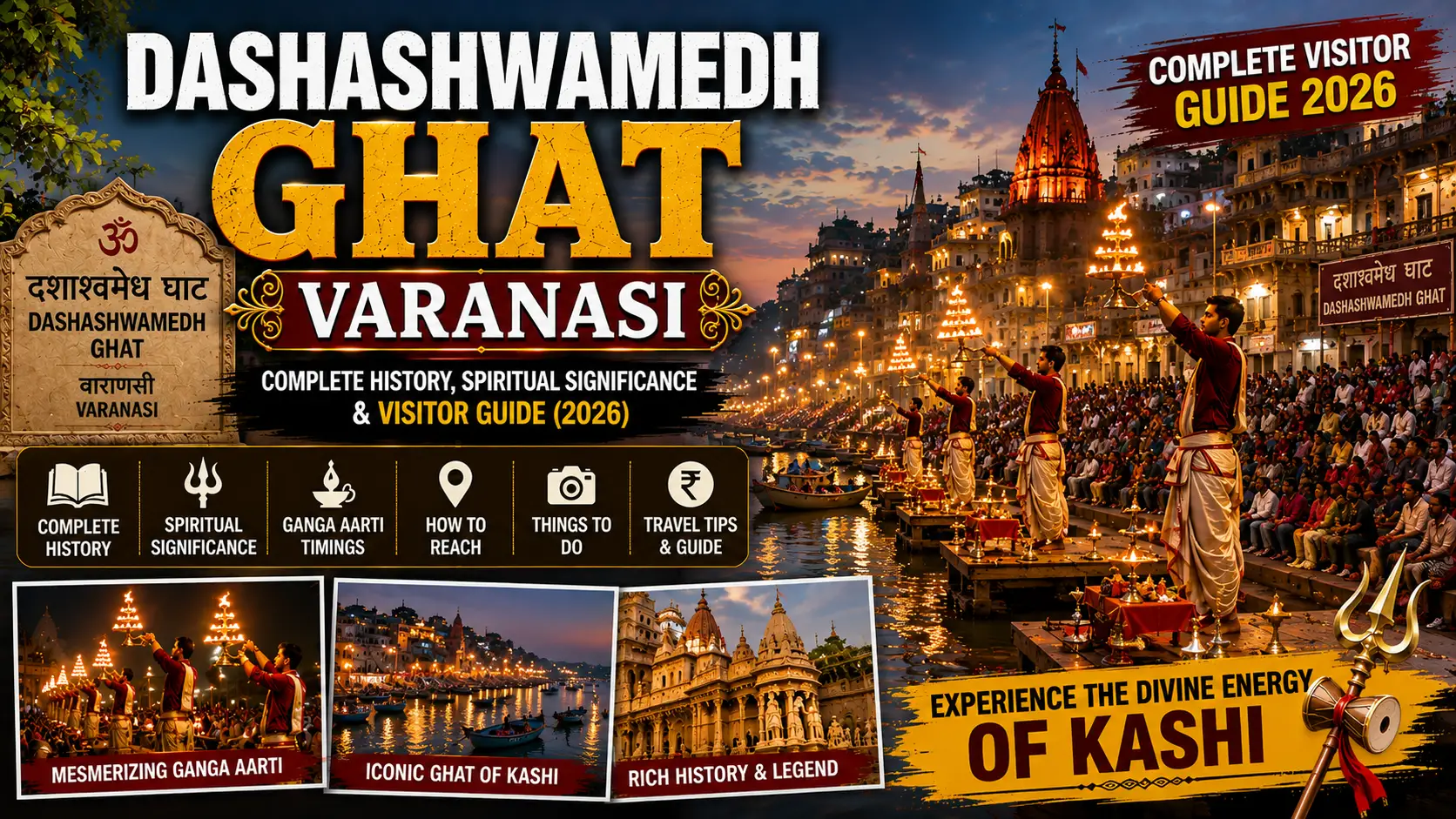
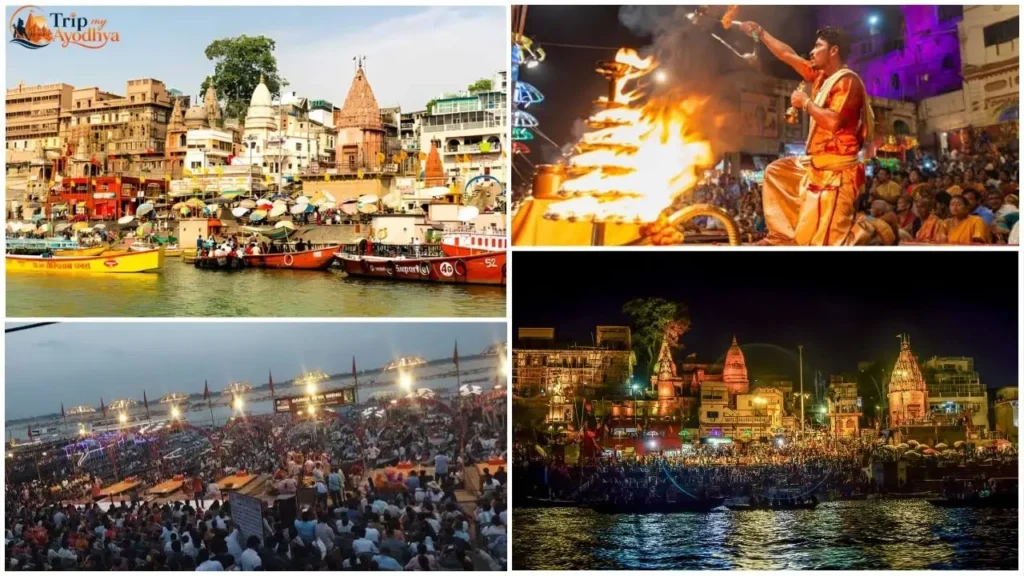
The Dashashwamedh Ghat at the banks of the holy River Ganga is the heart of spiritual Varanasi and it is not only one of India’s most scenic Riverview but also a very important place of worship. It is common sight to see thousands of pilgrims, tourists, photographers, and devotees coming here daily to take part in these long-time traditions that still hold their place. Dashashwamedh Ghat presents more than an opportunity for a photographic or a sightseeing session. It can show you the Ganga Aarti, sunrise over the river (very peaceful), and the evening chanting as an example.
If one is considering visiting Varanasi, it is understood that a visit to Dashashwamedh Ghat will form one of the main reasons for it and rightly so. The ghat is indeed the city’s primary ghat not only because of the number of people visiting but due to its great religious and mythological significance, the numerous ceremonies, as well as the cultural heritage.
Our detailed guide will help you get the full story behind Dashashwamedh Ghat and it covers the history and the myths that surround the ghat; the religious, spiritual and spiritual importance of it; and the features that make it famous; also, there is a reason why hundreds of thousands of people from all corners of the globe flock to it. The latter parts of the article will also provide information about when the Ganga Aarti happens, what boat rides are available; the nearby sights as well as the things a tourist can look for and practical guidance for your trip to Dashashwamedh Ghat to maximize your enjoyment.
What is Dashashwamedh Ghat?
This is the main or busiest dashashwamedh ghat (riverside steps) of Varanasi and is situated right along the western bank the sacred Ganga which the local legend claims to be the place with the most spiritual power and power. It is also one of the major attractions that brings devotees from all over India and travelers from all over the globe.
The ghat’s greatest fame lies in its being the site for the world-renowned Ganga Aarti, which involves priests doing a highly organized performance at night accompanied by large oil lamps, incense, conch shells, and Vedic hymns and chants. Besides that, the ghat remains a lively place from early morning until late at night where the pilgrims immerse in holy Ganges waters, the priests perform religious rites, boatmen take tourists on a river tour, and the visitors just feel the magical atmosphere and ambiance of this amazing place.
For most visitors, a trip to Dashashwamedh Ghat is the one thing that you absolutely must not miss from your visit to Varanasi. It is the place that sums up best everything there is about the city its devotion, tradition, and history in one place.
History of Dashashwamedh Ghat
Ancient Origins
Dashashwamedh Ghat’s history starts from time immemorial that it is woven with the legends and mythological Hindu accounts. Even though a definite time for the first construction of the ghat is missing, the references to this holy place have appeared in many ancient Hindu texts and also been preserved in local traditions.
According to one legend, the place has been revered ever since the days of Brahma and Shiva, and it became one of the main pilgrimage centers in India over the centuries. It has become a center for all kinds of religious, festive, and devotional activities and events to this day.
In contrast to a number of historical monuments where one usually gets the impression that one has entered the time capsule, Dashashwamedh Ghat still serves as a place of worship where the devotees practice the same rituals and customs that our ancestors did. So, if you come here, you can get the chance not just to enjoy the atmosphere of the ghat but also to witness living history.
The Meaning Behind the Name
The name Dashashwamedh comes from two Sanskrit words:
- Dasha meaning ten
- Ashwamedha means horse sacrifice
Together, the name translates to “the place of ten Ashwamedha Yajnas.”
According to this widely believed legend, Brahma performed these ten horse sacrifices here to honor Shiva, the destroyer. This ancient Indian religion rituals were grand ones, depicting highest level of spiritual authority, purification, and cosmic harmony. That is the reason it is still being treated as one of the important sacred places here. Another local view states that Brahma offered these sacrifices in order to help Shiva get back to Kashi. Hence, it is firmly believed here that Shiva himself is the guardian of this city. Historians, however, make a clear distinction between mythical stories and factual history, and therefore these legends are still considered an essential part of the holy nature of this place
Historical Development
After several renovations, the current layout of Dashashwamedh Ghat came into existence. Historical accounts mention that the ghat saw its renovation in the 18th century at the behest of the Peshwas of Maratha Empire who gave support for the revival and renovation of many sacred places in Varanasi.
Later after being repaired and beautified by local kings and benefactors, the Dashashwamedh Ghat was open all the time to pilgrims even after it had gone through the destructive effects of flooding and erosion. The wide stone stairs, temples, and shrines as well as the gathering points clearly indicate blending of preservation history and continuous devotional usage.
Rather than being an immovable relic, Dashboard Ghat has kept the spirit of the city alive, meeting requirements of millions of devotees through time, all the while retaining its original nature
Dashashwamedh Ghat Through the Centuries
Dashashwamedh Ghat has been eyewitness of multiple historical events, royal visits, religious processions, as well as changing culture over centuries. Saints, scholars, philosophers, and spiritual masters have been on the same steps of this place. Pilgrim community has been gathering at this site for centuries to do religious ceremonies, worship ancestors, festive days, and getting God’s Grace from River Ganga.
Even though it is true that Dashashwamedh Ghat is now surrounded by modern buildings and a shopping area, this holy place was and will always remain one of the main centers of Hindu religious activity, and it has maintained its ancient traditions. The daily activities at the ghat still reflect the life of ancient India, with the sound of temple bells, the echo of chanting mantras, people going for baths in the river, and the fire of homa being offered.
Why is Dashashwamedh Ghat Famous?
Dashashwamedh Ghat has achieved fame primarily because of its unique blend of spirituality, history, rituals, and culture. However, the truth is that it has no specific feature which makes it popular or even a reason.
1. The Spectacular Ganga Aarti
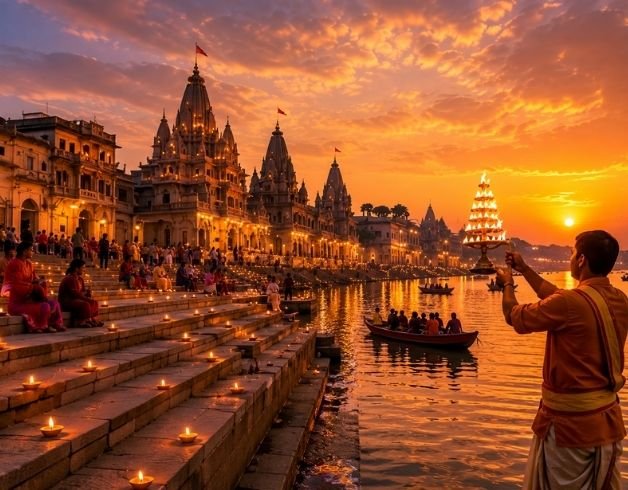
The Ganga Aarti during the evening is the main event for many to attend. When the sun sets, the priests, gathered in their groups, conduct a coordinated ceremony in the form of lighting up several layers of oil lamps, setting off incense, blowing the conch, ringing the bells, and chanting the rhythmic Vedic hymns. The shining reflection of the illuminated lanterns in the river Ganga forms a mesmerizing scene which is a major factor that brings a number of people every evening to the ghat.
This ritual is among the first memorable moments that the tourists get while touring in the city of Varanasi as the atmosphere is just that perfect during this activity.
2. One of the Holy Ghats in Varanasi
Lord Brahma and Lord Shiva are closely associated with this ghat besides Dashashwamedh being one of the most important and sacred ghats of Varanasi among several.
It is generally considered as a holy bath for the devotees by visiting Dashashwamedh Ghat and it brings with it the symbolism of both cleansing and spiritual refreshing. Therefore, it often becomes the first site on the pilgrimage list of the pilgrims before they head towards the other temples and other places of religious significance.
3. The Soul of Varanasi
Unlike other quiet ghats, Dashashwamedh always enjoys active engagement by the people. All day long, one would find.
- Religious rituals performed by the devotees
- Ceremonies carried by the priests
- Priests lighting the incense and candles for devotees. Devotees get them from the vendors.
- Row boatmen approaching passersby with invitations for river cruises.
- Music players and Bhajan singers.
- Local photographers capturing moments.
Its vibrant atmosphere is one of the things that gives visitors an insight into the spiritual lifestyle of Varanasi people.
4. Sunrise on the Ganges
Another time that Dashashwamedh Ghat offers altogether different experiences to travelers is in the morning.
At the time of sunrise, when the rays of the sun light up the river, one gets the opportunity to see both a small religious gathering of devotees and a group of yoga practitioners who are doing their meditation while stepping on one another on the banks. At the same time, silent boats of assorted color hues slowly move by, which give this scenery a calm beauty that is quite the contrast to the evening’s bustling crowds and noise, which makes people enjoy morning walks there as well.
5. Spiritual Events and Cultural Festivals
The ghat plays the role of a central hub during the celebrations of religious and cultural festivals which include:
- Dev Deepawali
- Kartik Purnima
- Ganga Dussehra
- Makar Sankranti
- Chhath Puja
- Mahashivratri
When such festivals occur, the area is illuminated with countless lamps, adorned with flowers, and decorated with bright colors; such beautiful scenes are sure to leave an impression.
Spiritual Significance of the Dashashwamedh Ghat
A Sacred Gateway to the Divine
Varanasi is considered one of the holiest cities for Hindus and they believe that the spiritual heart of the city lies in Dashashwamedh Ghat. The River Ganga is seen as a holy mother with sacred waters which cleanse, nurture and deliver souls from worldly attachments. Offering prayers or taking a ritual bath at the holy ghat is regarded as an excellent way to express one’s devotion to the divine. Many worshipers choose to start their pilgrimage at Dashashwamedh Ghat before moving to Kashi Vishwanath Temple, since the ghat is seen as a very auspicious place to begin a spiritual journey.
Activities at the Holy Ghat
If you visit the Dashashwamedh Ghat during the day, you will get to see various religious activities that are going on at the same time. Some of these include:
- Holy bath (Snan)
- Ganga Puja
- Deep Daan (Lighting of lamps)
- Rites in memory of the ancestors
- Personal prayer
- Vedic rituals conducted by priests
These sacred customs underline the ghat as an active site of spiritual worship rather than just a historical attraction.
Symbolism of the Ganga
The Ganga, which is believed by devotees to be divine and full of grace, is represented through its ever-flowing waters as a symbol of pureness and regeneration. The prayers offered to the River Ganga can also be interpreted as a recognition of the fact that we are the creatures of a much higher power, who will be there for us, even as we seek to connect with it.
As a culmination, during the sunset time, the Ganga Aarti brings together the elements of light, sound, scent, and movement in a synchronized manner thereby creating a deep emotional experience for the people participating in it and also those watching.
A Place That Welcomes Everyone
Dashashwamedh Ghat which has a Hindu religious foundation is actually not a barrier when one wants to get a glimpse or take part in rituals as an observer. Many foreigners and non-Hindus have mentioned that they felt very comfortable there, that the setting was peaceful and meditative. So, whether you have a spiritual need, you want to explore the culture, take pictures, or just be curious, the Dashashwamedh Ghat can give you an unusual chance to see the living traditions that the residents follow in their everyday life.
What to Expect During Your First Visit
On your first visit to Dashashwamedh Ghat you are about to experience a highly sensory atmosphere. The sound of bells, the smell of incense, the sight of colorful flower arrangements, and the continuous movement of pilgrims result in a truly unique vibe which one will not find in any other Indian city.
It is a place which is able to merge the past and present, along with faith and daily life at the very doorstep of one of the sacred rivers of the world.
Ganga Aarti at Dashashwamedh Ghat
If one thing is certain about Varanasi, it is that you cannot leave the city without experiencing Ganga Aarti at Dashashwamedh Ghat. One of the few rituals where music and devotion merge so perfectly, this magnificent ritual at Dashashwamedh Ghat has the power to enchant devotees and tourists for many years.
Contrary to a typical cultural show, Ganga Aarti is an offering of prayers to the worshipful goddess Maa Ganga who according to Hindu religion has manifested herself as one of the most powerful rivers of the world. The ceremony is meant to thank the River Ganga for its ever-giving life essence and at the same time to bless human lives with peace, happiness, and enlightenment.
As the sunset time approaches, the riverfront starts to glow like a spiritual stage. Priests, clad in the traditional attire of saffron and white, are seen on high platforms facing the river. They sing hymns in a rhythmic way along with ringing bells while using brass oil lamps to do the ritual, which is one of the main attractions of the Aarti. Besides the music and the visual spectacle, the spiritual energy at Dashashwamedh Ghat during the Ganga Aarti must have had its share of attracting the spectators and making them feel blessed too.
The Ganga Aarti, held on the bank of River Ganga is a great religious ritual which not only attracts Hindus for the celebration but also fascinates the visitors who would otherwise be completely uninterested in religious affairs.
Dashashwamedh Ghat Ganga Aarti Timings
Although hours may be slightly different according to the changing sunset hours, the following pattern of timings can be considered as a guide.
| Season | Approximate Aarti Time |
| Summer (April–September) | 7:00 PM – 7:45 PM |
| Winter (October–March) | 6:30 PM – 7:15 PM |
Morning Aarti
A relatively small and less formal version of the Aarti is conducted at around sunrise, typically between the hours of 5:00 AM and 6:00 AM, adjusted to the local season. It is less crowded and provides a tranquil atmosphere for those looking for an away-from-the-mob spiritual immersion.
When Should You Arrive?
Depending on the viewpoint, you may need to come quite early to get a comfortable spot:
- Around 6-9 months before the ceremony if you want to sit on a row of seats facing the priests, it is best if you reach earlier than the priests do
- If, alternatively, you wish to see from a boat you would want an extra 45–60-minute time.
- In festivals that attract big crowds, such as Dev Deepawali, Kartik, and Mahashivratri it is better to arrive really early.
Best Places to Watch the Ganga Aarti
Perhaps, one of the favorite questions tourists ask is where it is best to watch the ritual. Each viewpoint has its own advantages.
1. From the Ghat Steps
Seated on the steps at the ghat puts you quite close to the priests, and thus you can experience the singing of the hymns, the tolling of the bell, the lighting of camphor, and other items quite closely.
If, like me, you are a complete beginner at religious things, and you are not yet used to the rituals and the spiritual atmosphere surrounding them, this is the way to go
Pros
- You have access for free
- Close up for seeing the rituals and the priests’ movements
- Wonderful atmosphere
Things to Consider
- Packed especially weekends and holidays.
- A very limited number of sitting places especially if you are coming later.
2. Watching from a boat on the river
Some tourists like going to Aarti on a boat on the River Ganges.
In such cases, you get a magnificent view of all the lights on the ghat and priests doing their work as if it was just a play.
Advantages
- Capturing moments with your camera will be much easier
- Very rarely crowded unlike stepping into one of the crowded platforms
- You can look at the lamps reflecting on the calm river water and get an incredible view
Booth public and private boat trips are arranged. It is better to check the charges beforehand.
3. Rooftop Cafeterias and Accommodations
Most of the buildings near the Dashashwamedh Ghat have magnificent views of the ceremonies and it is quite a common scene for people from cafes or hotels to come out to their terraces and view Aarti during the sunset.
It is a very comfortable choice for a visitor who prefers less crowded atmosphere and also enjoys pleasant view over the river and the city. One of the disadvantages may be the view quality as sometimes, depending on the direction where the building is, you might not see all the details especially during festivals when lots of lights come onto the riverside and cover it completely.
Best Time to Visit Dashashwamedh Ghat
The Dashashwamedh Ghat is very popular and one of the most visited places in Varanasi even during all seasons of the year. Of course, it will be a better visit with some planning and choosing a season and hour when the place will have a comfortable atmosphere and not too many tourists.
October to March (Highly Recommended)
It is believed to be one of the ideal times to travel to Varanasi during the pleasant autumn and early winter. The cool weather enables comfortable walking in the ghats and visiting nearby places of interest. Generally, the temperatures range from 10°C to 28°C which is quite comfortable. The city’s festive calendar also gets in motion at this time, and a lot of festivals are being celebrated in the streets.
April to June
This is a hot time of the year when the temperature may easily reach and even surpass 40°C; as a consequence, doing any outdoor activity, exploring unfamiliar places, and simply just being in the streets during midday can be very unpleasant or even unbearable.
Should you decide to visit this season:
- Go exploring early in the morning or when the sunset
- Keep a bottle of water and sunscreen near you
- If the weather permits, do not stay indoors during the afternoon
July to September
This season is mostly characterized by rain, the kind of heavy rainfall that will definitely be a problem for the city to manage.
There are some advantages to the monsoon the ghats, being covered with greenery after some rain, can give very pretty photos, also the water which may have been murky for some days before rains will suddenly clear, etc. However, in terms of accessibility and transportation the monsoon season is a problem as you will see water levels rising and also the ghats may be flooded for a bit.
If you want to be close to Mother Gunga and experience an array of cultural rituals you may consider visiting in one of the months mentioned.
Best Time of Day
Sunrise
Most travelers with experience recommend that one of the beautiful moments at Dashashwamedh Ghat is the early morning, right when sun comes in the sky and touches everything.
First morning hours of day bring:
- Peace in nature
- Photography in golden hour
- Early morning prayers in temples
- Yoga classes
- Quiet boat rides
- Peace due to fewer visitors
The calm morning waters reflecting the sun are simply beautiful and a great moment to get the feel of local life.
Evening
The evening hours are full of activities mainly due to Ganga Aarti. You can expect to find
- Lots of visitors
- Street food stalls
- Religious rituals
- Boat rides
- Cultural shows at night
You should try and go during morning and dusk hours if you want to experience various aspects of Dashashwamedh Ghat.
Top Things to Do at Dashashwamedh Ghat
There is much more to see at the ghat besides the evening aarti.
1. See the Ganga Aarti
Rather than being solely photo-focused, a true visitor will not miss an opportunity to experience the main attraction here and will spend time studying the various religious practices as well as the deep faith of the performers
2. Have a Boat Ride at Sunrise
It is a very peaceful way of exploring the city to go in a boat at sunrise along the Ganga. You can see the various ghats, temples, and riverside buildings, while also having the chance to observe how local daily life happens with people performing different religious practices on the banks of the river.
3. Visit the Close by Marketplaces
You will find among the lanes that lead you to Dashashwamedh Ghat
- Sweet shops selling various kinds of sweets
- Selling Banarasi silk
- Religious books
- Brassware
- Rudraksha beads
- Handmade stuff from this region
- Entrance to several temples
A visit to these lively places is necessary when you are in Varanasi.
4. Light a Diya on water
One notable example of a cultural experience is when you light a small clay lamp decorated with flowers and gently float on the river. The symbolic meaning of this act is to offer prayers, give thanks, and to be hopeful
5. Look at the Rituals That Happen Every Day
People visiting Varanasi during the day can see the following:
- people meditating
- yogis taking their morning classes
- spiritual preachers speaking about holy scriptures
- nation’s chanting
- ceremonies dedicated to Vedic gods
- playing music in the long-standing tradition
- immersing in the holy river as an act of penance
The combination of these factors together gives a living portrait of the culture of religion in Varanasi.
6. Try Some Street Food around the Ghat Area
One should not miss the taste of Varanasi’s traditional delicacies. A few of the more famous local dishes served here are:
- Kaveri Bhel
- Tomato and Potato Chaat
- Malaiyyo a local winter dessert
- Jalebi a very sweet dessert
- Lassi a yogurt-based drink
- Banarasi Paan a betel leaf with many flavors
We recommend you only go to the stalls where they are crowded and which have been well-kept, because you are more likely to be fed by the best cooks.
Same Day Ayodhya Tour Package Itinerary
Start of the Day: Hotel, Station, or Airport Pickup
You will get a car to your selected location in Ayodhya which can be your hotel, railway station, or airport as well. With this pick-up service, the journey of your Ayodhya spiritual visit begins in a very comfortable way.
Visit Shri Ram Janmabhoomi
You will visit the great Shri Ram Janmabhoomi where Lord Ram and Sita are the deities. This temple was built on the site of the former Janaki Mandir which was destroyed. You will have an experience of the religious atmosphere of this holy birthplace of the two divine children of Lord Ram in a temple.
Visit of Hanuman Garhi
Pray to Lord Hanuman at their most sacred hanuman Garhi in Ayodhya one of the most sacred temples dedicated to hanuman.
Experiences on Kanak Bhawan
You will go to Kanak Bhawan which is not only a place of pilgrimage for the religious people but also one of the architectural marvels built as an ancient part of the Ayodhya kingdom and is said to be the place where Sri Ram married Goddess Sita.
Visit to the ghats of Saryu River
You can spend a quiet time at the Saryu ghats, where you can admire this holy river and feel its spiritual energy.
Shopping and Temple Visit
Walk around the bustling markets in the vicinity, buy your favorite prasad, and explore small temples as well.
End of the Tour
After the tour, you will get back to your favorite place in Ayodhya or wherever you wish. The tour will include a hotel, station or airport drop-off depending on your request.
Book Your Dashashwamedh Ghat Varanasi with Trip My Ayodhya
Plan and enjoy a spiritually enriching travel experience in a very convenient way through the expert assistance of Trip My Ayodhya. Being a reliable and trusted company for pilgrimage tour management, we ensure your tours from a temple to a temple go like a dream. We have customized tours and comfortable transport. You need not only get the spiritual darshan but also have an enjoyable time in visiting local tourist spots while you are there. With our services, you will not have hotel booking or travel planning worries, as everything is already well arranged by us.
Visit Ayodhya, Varanasi, Mathura, and Vrindavan with a peace of mind as we handle things on our end so that you can devote your time and energy solely to experiencing a spiritual and religious trip. Select our package as the best of all your options if you want a hassle-free, pleasant, and unforgettable travel venture to the most holy places in India.
Bookings with Trip My Ayodhya What You Gain
- Customized Tours We make the itineraries according to how the customer needs time and expenditure-wise
- Travel in Comfort Our vehicles are kept in a good condition and the drivers are experienced
- Celebrating Priority Darshan You will be able to save the time at temple visits if we handle temple visits well
- Local Experts The tour is explained in detail with spiritual knowledge by an expert guide
- Lower Cost There is a combination of many services with competitive price and no hidden fees
- Available Anytime Service Customer support team will give you help for the rest of your adventure
- Integrated Services All the necessary services like stay, transport, and sightseeing have to only be asked for once
Also BOOK: Same Day Ayodhya Tour Package – Itinerary – Explore the top temples and spiritual attractions of Ayodhya in one day with a well-planned sightseeing itinerary.
Plan your upcoming trip with us and experience a divine journey like never before!
📞 Call Us: +91 7078723132 | +91 9557104160
📲 WhatsApp Us: +91 7078723132 | +91 9557104160
🌐 Visit Our Website: Trip My Ayodhya | Vrindavan Mathura Tourism
🔗Explore all our packages here 👉 Trip My Ayodhya Packages
🔗 Read Our Blogs for Travel Inspiration: Trip My Ayodhya Blog’s
Dashashwamedh Ghat Boat Ride Guide
Boating at the riverside of Dashashwamedh is undoubtedly an excellent thing to do.
Types of Boat Rides
Shared Boats
The best way for the cheap traveler who likes sharing accommodation is to choose a bus with other people. A shared boat, as it is generally called, carries more than one person and is usually restricted to certain pathways along the ghats.
Private Boats
Boating oneself is a better choice either because they are family people or photographers and in general those who do not want to be distracted.
Best Time for Boat Rides
Sunrise
Why dawn? Well, for these reasons:
- Photo opportunities are limitless
- Migratory birds are active.
- Atmosphere is calm without much disturbance.
- Sun rays are diffused and the overall setting is romantic.
Sunset
A perfect choice for viewing the Ganga Aarti
- Town’s lights shimmering in the water of the river
- The skyline after the sun sets
- A colorful mix of cultures
Helpful Boat Ride Tip
- Check the fare to be charged and pay after the boat departs.
- Your safety is of the upmost importance when wearing life jacket when possible.
- Bring with you only the necessary things.
- Better be seated in a boat moving along the river instead of standing in a moving boat.
- Please respect all local customs and do not litter in river.
Photography Tips
Dashashwamedh ghat is a wonderful place for photo enthusiasts in India as well.
Golden Hour (Sunrise)
Ideal for:
- River reflections
- Silhouettes
- Temple architecture
- Boat scenes
Blue Hour (After Sunset)
Perfect for:
- Ganga Aarti
- Illuminated lamps
- Long-exposure photography
- Reflections on the water
Subjects of Interest for Photographs
- Rituals of priests
- People and their boats
- The view of the river at sunrise
- All kinds of temple designs
- Priest’s flower garlands on altar
- Daily life scene around here
- The people who come here in the name of their religion
- Aarti at night
Prior to taking any picture, you like to zoom in very close please get that person’s consent especially in the cases of those who are engaged in religious rituals personally.
Nearby Attractions
One of the main draws of staying at Dashashwamedh Ghat is its location, being very close to Varanasi’s most noteworthy attractions.
1. Kashi Vishwanath Temple
This holy Shiva temple, one of the twelve Jyotirlingas, is just a hop away, making it easy to include in your holy pilgrimage.
2. Manikarnika Ghat
One of, if not the, oldest and most revered cremation ghats in India, this place is a deep source of the Hindu religion about liberation or Moksha.
3. Assi Ghat
Not only is this ghat picturesque but it is also one of the most happening, with events being arranged here, yoga and the Subah-e-Banaras morning session is offered to visitors besides.
4. Shri Kashi Annapurna Temple
It is a popular and very powerful temple, devoted to goddess Annapurna that is very near the Kashi Vishwanath Temple
5. Vishwanath Gali
This is the name of a local market, which is full of life and has all kinds of items for the religious visitor:
- Banarasi silk sari
- Religious souvenirs
- Brass gods’ idols
- Locally made desserts
- Snacks and street food
6. Banaras Hindu University (BHU)
Among other things, this campus is home to architectural splendor and the New Vishwanath temple making it one of the spots to include for your sightseeing.
Practical Travel Tips
Minor changes in advance could do wonders to make your vacation enjoyable and trouble-free.
Dress Modestly
Since Dashashwamedh Ghat is a highly holy place, dress appropriately so that both your shoulders and knees are covered in line with the local customs.
Carry Cash
While mobile wallets are gradually making their way here, you are likely to prefer handholding the notes for small vendors, flower sellers, and boatmen.
Wear comfortable shoes
It is very probable you will spend some couple of hours on stone steps and through alleys of old lanes Comfort shoes will save you from being hurt.
Stay Hydrated
Buy yourself a reusable water bottle to carry, which would be useful, especially in the hotter season.
Tourist Spot Tips: It is also important in any crowded tourist spot, to keep your valuables tucked in, and watch your surroundings.
Be A Respectful & Respectful Tourist
- Take off your shoes wherever is necessary.
- Do not interfere with someone’s religious work.
- Do not drop trash.
- Breathe and speak softly during the religious rituals.
- Comply with the local police if some area you are standing in gets so crowded and they decide to clear it.
How To Reach Dashashwamedh Ghat
You will be quite delighted to know that Dashashwamedh Ghat in the midst of Varanasi’s old city is quite accessible by different means of transport. However, it still involves some amount of walking, through the narrow lanes in the area that actually constitutes the heart of Banaras.
You could arrive by car and reach within an hour or walk along with your luggage for one to two kilometers, whatever you choose will not be a problem. Also, one needs just a little bit of forethought to reach this place, whether coming from a different state or city or going to stay here.
By Air
Nearest International Airport will be Lal Bahadur Shastri (VNS), located 25, 27 km away from Dashashwamedh Gha traveling to it by means of:
- Taxis with prepaid fare
- Uber and Ola app-based taxis
- Autorickshaws for a part of the journey
- Hotel Transfers
Generally, one could expect 45 minutes to 1.5 hours’ drive depending upon the traffic condition.
Travel Tip: During festivals and other big pilgrimage events, it can move rather slowly near old Varanasi.
By Train
Varanasi is considered as one of the important cities of India by the Indian Railways.
| Railway Station | Approximate Distance |
| Varanasi Junction (Cantt) | 5–6 km |
| Banaras Railway Station | 7–8 km |
| Kashi Railway Station | 6–7 km |
After arriving at the station, you may go there via a
- Autorickshaw
- E-rickshaw
- Taxi
You will notice that only pedestrians are allowed on these lanes near the river, so the vehicles have no access to the ghat. The short distance to the ghat is a mere walk of 10-20 minutes from the point where you will drop.
By Road
The road network from Varanasi is very strong leading to:
- Prayagraj
- Lucknow
- Ayodhya
- Patna
- Gorakhpur
There are also various state buses and private operators coming to the city regularly. If you are coming in a private vehicle remember to park it in a parking lot near Godowlia or some other designated parking zone only and then continue walking.
Walking to Dashashwamedh Ghat
A wonderful way of visiting Dashashwamedh Ghat is by walking through the old city and its alleys that are full of life and activity. Along the way you will encounter:
- Banarasi silk shops
- Bhakti bookstores
- Sweet shops
- Flower vendors
- Small temples
- Street food stalls
In fact, even the narrowest lanes in a densely packed city will reveal the stories, history, and culture they harbor through their vibrant presence.
Entry Fee
Possibly the greatest feature of visiting Dashashwamedh Ghat is the fact that there is no charge for entry at all.
| Activity | Fee |
| Entry to Dashashwamedh Ghat | Free |
| Attend Ganga Aarti | Free |
| Morning Visit | Free |
| Evening Visit | Free |
However, optional expenses may include:
- Boat rides
- Flower offerings
- Puja services
- Local guide charges
- Donations at temples
- Snacks and refreshments
Always confirm prices in advance for optional services, especially boat rides and private rituals.
Opening Hours
Since Dashashwamedh Ghat is a public riverfront, it remains open 24 hours a day.
That said, the best visiting times are:
| Time | Experience |
| Sunrise | Peaceful prayers, yoga, boat rides |
| Morning | Religious rituals and temple visits |
| Afternoon | Less crowded but warmer in summer |
| Evening | Famous Ganga Aarti |
| Night | Beautiful riverfront atmosphere with fewer crowds |
Facilities Available
As it is one of the most active ghats in Varanasi, Dashashwamedh Ghat provides a respectable number of facilities for the comfort of its visitors.
Seating Places
Besides their religious purposes, the stone steps of the ghat are also very conveniently designed with space for seating. When occasions for big festivals come, organizers may be found putting up extra temporary facilities just for managing the crowds.
Public Toilets
Public toilets are only found around the market areas of the vicinity. Nevertheless, there can be issues when it comes to sanitization. To have your needs taken care of comfortably and hygienically, you could go and use these facilities at the hotels, restaurants, or cafes you visit.
Drinking Water
Vendors around here sell water in sealed bottles, so there is no need to worry about the source for your consumption. If at all you are going around, you may get exposed to water that was not treated but that will be better to refrain from drinking
Food Options
In the vicinity, one is surrounded by a variety of eateries where one can find restaurants, cafes and street food vendors serving the following food items:
- North Indian dishes
- Snacks of Banaras
- Soft drinks
- Chaat
- Sweets
- Snack food and drinks
Make sure you are eating at busy, clean restaurants, or ones that follow stringent and consistent hygiene procedures.
ATM and Banking Services
Many ATMs can be found a short walk away from the ghat, especially at a place called ‘Godowlia’. Although nowadays most people prefer making transactions electronically, it might still be worth bringing some cash along just in case one has to do with small purchases for instance.
Medical Help
There are pharmacies and clinics within easy access. For any sort of emergency situation, it is best not to rely on the nearby clinics and hospitals and instead contact a member of the local authority.
Mobile Phone Coverage
All the leading telecom companies have solid reach in that area. The speed of wireless internet tends to lag a lot when big crowds are around the ghat because of the overload on the network.
Accessibility Information
The character of Varanasi’s old city gives rise to difficulties for the handicapped or senior citizen. It is, however, recommended as follows:
- There are a large number of stone steps to climb
- Pathways are not smooth
- Streets are pretty narrow
- Crowded places are hard to find in the area where pedestrian activities go on only
Seniors as well as people with disabilities are encouraged to go during quiet hours and to factor in sufficient time for them to get around without any rush.
Responsible Tourism Tips
Dashashwamedh Ghat is not only a tourist spot but more importantly a site of worship where religious people conduct their rituals on regular basis. If you act with respect and courtesy while visiting this place, not only will you help protect its sacred character but the whole experience of visiting a place of worship will be much more enjoyable too.
You Should
- Keep the modest dress code.
- Adapt yourself to a local way of life.
- Do not litter, keep your waste throwing in the trash.
- If you want to take a photo of somebody, ask permission first. The person is in the picture, but it seems to me the main object of the picture was not a person.
- Encourage local artisans, especially small business owners.
- Be courteous when religious services are going on and you want to move in or get out of the room.
You Should Not
- Go inside the areas of the temples that are reserved unless you have been told it is okay to do so.
- Intervene during any of the religious rituals in some way or another
- Leave plastic or paper littering around the river
- Use very hard bargaining techniques toward small-scale traders
- Operate a UAV device illegally without proper permission
- Near the ghat area, you cannot enjoy an open bottle of alcohol or a cigarette
Safety Tips for Visitors
Varanasi is generally welcome to travelers, but taking some simple precautions will help a stay go more smoothly.
Guard Items Belonging to You
The large crowds in the late-night Aarti and festivals can be intimidating. Do not take your bag or other things out to the public but instead put a lock for the safety of your belongings and do not show any kind of fancy jewelry or display the amount of cash that could be in your wallet.
Avoid the Scam
Some people might offer you unsolicited guide services or religious offerings for much higher prices. Reject the suggestion if you are not interested but still you may have a polite approach and verify the cost first if the situation allows you to participate.
Drinking a Lot
In the extremely hot summers, you need to keep your drinking water with you and wear a hat or cap.
Footwear that is comfortable is necessary
You will have to cover very few to some ground in stone streets and non-level areas. So, it is best to wear shoes that do not let your feet slip.
Do not take a step near the riverbank
The terrazzo steps could be very slippery due to wet conditions which are common during the monsoon season. If the riverbank is very wet, it might be unsafe for you to take a picture near the water.
Plan Your Festival Visit
During the Dev Deepawali and Kartik Purnima there is very dense human traffic. If you want to visit the places:
- Arrive early
- Go with police instructions
- Carrying a mobile phone which contains all of your numbers
- Have your travel companions stayed with you
Conclusion: Dashashwamedh Ghat
Dashashwamedh Ghat is not only a landmark by the riverbank but also spiritual center of Varanasi. Its historical, cultural, and religious significance with stories of Lord Brahma and Shiva, plus the beautiful ceremony of Ganga Aarti that takes place every evening, it is a perfect place to be immersed in Varanasi’s spirituality culture and religion. Whether you want to connect with spirituality, explore India’s cultural heritage, or simply enjoy the River Ganga in style, a trip to Dashashwamedh Ghat is the one to remember. Watching the sunrise on the river, enjoying a serendipitous boat ride, getting lost in the alleys of the old town, and seeing thousands of lit lamps during the evening Aarti are some of the most magical things you might come across in Varanasi, and they will leave you deeply moved. Make a wise decision when choosing a time to go, honor cultural norms, and remember the traditions that have lived here generation to generation. If you are visiting other places in the city as well, take it slowly and make your way through Kashi Vishwanath Temple, Assi Ghat and Manikarnika Ghat so that your understanding of Varanasi’s spiritual and cultural heritage will be more accurate in detail.
📞 Call Us: +91 7078723132 | +91 9557104160
📲 WhatsApp Us: +91 7078723132 | +91 9557104160
Frequently Asked Questions (FAQs) Dashashwamedh Ghat
1. What makes Dashashwamedh Ghat such a famous spot?
Dashashwamedh Ghat is known as one of the centers of worship where people pray on Ganga Aarti at every evening of the year and also for the deep religious meaning and connection with Indian gods for hundreds of years. It is considered one of the most sacred and lively ghats of Varanasi. People come here from everywhere for spiritual reasons, sightseeing etc.
2. Should one pay for visiting Dashashwamedh Ghat?
Not at all. Dashashwamedh Ghat admission is free. A Ganga Aarti attendance is no issue. Visitors, however, can indulge in different optional expenses such as flower worship, boat trips, and sightseeing guides which may have costs linked to them.
3. When should someone go there?
April to October will be the most suitable time if you plan to travel by land. Morning is an enjoyable time to get here if you are looking for a quiet atmosphere and in fact, night is necessary if you want to watch Ganga Aarti, which is a major event.
4. How long is the Ganga Aarti?
The evening Ganga Aarti typically goes on for 45 to 60 minutes, and this duration is also affected by the time of year and the celebration of a special religious day.
5. Can tourists attend the Ganga Aarti?
One of the highlights is that both Indian and foreign tourists are allowed to enjoy the Ganga Aarti ceremony. It is quite appropriate for them, and one should dress modestly, come at least an hour before the start as it is a sacred occasion to witness, and also be in respectful behavior throughout the session.
6. Is photography allowed at Dashashwamedh Ghat?
Photography is quite common in public spaces, and it is generally allowed, but people should be careful not to interrupt any spiritual rituals going on and get a word with the people first before photographing them especially very close-up shots.
7. Which is better, watching the Ganga Aarti from the steps or a boat?
Taking in the Ganga Aarti from steps and a boat, each experience will present something different. From the steps, you will get a nice and clear view of the rituals and be able to feel the religious and devotional atmosphere firsthand. Meanwhile a boat ride gives you the chance to enjoy the whole scene from above including the pretty reflections from the lamps which are illuminated and also enjoy the beauty of the river and temples surrounding them while listening to the spiritual songs of the ritual.