TRAVEL GUIDE•Travel Guide•UPDATED OCT 2026

Best Time to Visit Ayodhya – Month by Month Weather Guide

By Rohit•23 Oct 2026
Best Time to Visit Ayodhya – Month by Month Weather Guide
Quick Answer

The best time to visit Ayodhya is October to March, when temperatures stay between 12°C and 28°C and the weather is comfortable for temple visits and the Saryu Aarti. January and February are the calmest and coolest months. November brings Deepotsav and the million-diya spectacle, but also peak crowds and 2–4x hotel prices. May and June are brutally hot, with highs crossing 40°C, and should be avoided. July to September is monsoon season — quiet, green, and humid, with the shortest darshan queues. For elders, photographers, and budget travellers, the right month depends on your priority. For a season-wise Ayodhya package with darshan assistance, contact Rohit at 7078723132 or visit tripmyayodhya.com.

Quick Enquiry

The ideal time to visit Ayodhya is from October to March, because during this period the daily temperature stays within a range of 12°C to 28°C, which makes it possible to stand in line at the temples, attend the Saryu Aarti, and take long walks around the Ram Mandir complex without being uncomfortable. This six-month window can be broken down into two distinct periods: November to February is the most peaceful and comfortable period, while October and March are transitional periods that provide excellent weather conditions, with less crowding.

Namaste, my name is Rohit and I am a guide. I have been assisting visitors to this region for over 8 years. Although Ayodhya is not where I live, I have escorted many hundreds of individuals and groups on their visits to the Ram Mandir, the Saryu Ghats and during the festive times of Deepotsav and Ram Navami.

What most travel writers have gotten wrong is: they say "October to March" then shut up. However, the experience of Ayodhya in October will be different from the experience of Ayodhya in December. In November, Deepotsav attracts hundreds of thousands of pilgrims. In May, 45 degree temperatures make the marble paths so hot you could fry an egg on them. July has a green and empty Ayodhya that few tourists see. February offers the same great weather as November but without all the craziness associated with festivals.

Every month is broken down in this guide (temperature, rainfall, how many people are there, hotel costs and how the city feels) so that you can find the time frame that fits your preferences, rather than simply picking based upon a general season.

Quick Facts: Ayodhya Weather at a Glance

Season Months Temperature Range Crowd Level Verdict
Winter (Best) Oct–Feb 8°C–28°C Low to Medium Best overall
Summer (Avoid) Mar–Jun 30°C–45°C Low (except Ram Navami) Avoid afternoons
Monsoon (Quiet) Jul–Sep 24°C–34°C Lowest of the year Good for peace, not for comfort

Best overall: Late November to mid-February.
Best for atmosphere: Deepotsav (October–November) and Ram Navami (March–April).
Best for quiet: Mid-week in July or September.
Avoid: May and June peak afternoons.

We tell you honestly which month suits your group — elders, children, or photographers. Contact +91 7078723132

Why October to March Wins

Ayodhya's climate is sub-humid, with a long, hot summer, a humid monsoon, and a short, cool winter. The cool window is narrow but excellent.

What Makes Winter Comfortable

  • Daytime temperatures sit between 12°C and 25°C — cool enough to walk for hours without exhaustion.

  • Mornings near the Saryu dip to single digits, with fog rolling over the ghats — the reason photographers come in December and January.

  • The evening Saryu Aarti at Ram Ki Paidi has its best atmosphere in this season.

  • Barefoot temple walking is manageable, unlike summer, when the marble radiates heat by 10 AM.

The Trade-Off: Festival Crowds

The same window contains Ayodhya's two biggest festivals. Deepotsav (October–November) and Ram Navami (March–April) draw lakhs of pilgrims, and hotel prices climb 2–4x during festival weeks. If you want the pleasant weather without the crush, aim for late November to mid-February, after Deepotsav and before Ram Navami.

[Add your line here]: We help you pick a week that avoids the festival surge without sacrificing the weather. Contact +91 7078723132

Month-by-Month Weather Guide

January

Detail Information
High/Low 20°C / 10°C
Rain ~5 days
Crowd Low to medium
Verdict Excellent — the calmest, coolest month

January is Ayodhya at its quietest. The fog on the Sarayu in the early morning is spectacular for photographers, and the temple queues are short. Carry warm layers — mornings can dip to single digits, and the Mangala Aarti at 4:00 AM is genuinely cold.

February

Detail Information
High/Low 24°C / 11°C
Rain ~3 days
Crowd Low
Verdict Excellent — the sweet spot

February is arguably the single best month for a first visit. The weather is mild, the crowds are low, and the Deepotsav chaos is months away. If you are travelling with elders, this is the month to book.

March

Detail Information
High/Low 30°C / 16°C
Rain ~5 days
Crowd Medium (Ram Navami falls in March or April)
Verdict Good — but warming up

March is the transition month. Early March is still pleasant; late March starts to heat up. Ram Navami can fall in this month, bringing massive crowds and celebrations. If you visit during Ram Navami, plan temple visits for early morning.

April

Detail Information
High/Low 36°C / 21°C
Rain ~2 days
Crowd Low (outside Ram Navami week)
Verdict Manageable — budget travellers only

April is when the heat begins to bite. Hotel rates drop to their lowest of the year, which makes it attractive for budget travellers. But you must schedule darshan before 9 AM or after 5 PM — afternoon visits are draining.

May

Detail Information
High/Low 42°C / 26°C
Rain ~1 day
Crowd Low
Verdict Avoid — peak heat

May is the hottest month. Average highs cross 39–42°C, and the marble pathways around Ram Mandir radiate heat back at you. Seniors and children should avoid this month entirely. If you must travel, carry cotton socks — the floors are unforgiving by 10 AM.

June

Detail Information
High/Low 40°C / 28°C
Rain ~8 days
Crowd Low
Verdict Avoid — heat and early monsoon

June is still brutally hot, with the first monsoon showers arriving late in the month. The heat is the same as May, and the humidity starts to climb. This is not a month for a comfortable pilgrimage.

July

Detail Information
High/Low 33°C / 25°C
Rain ~23 days
Crowd Lowest of the year
Verdict Quiet but wet

July is the monsoon peak. The Sarayu runs full, the ghats turn green, and the temple courtyards are unhurried. Darshan queues are the shortest of the year. The trade-off is humidity and unpredictable rain — carry quick-dry fabrics and an umbrella.

August

Detail Information
High/Low 32°C / 25°C
Rain ~28 days (the wettest month)
Crowd Very low
Verdict Quiet but very wet

August is the rainiest month, with nearly daily showers. The stone steps near the ghats get slippery, so careful footwear matters. If you do not mind the rain, you will have Ayodhya almost to yourself.

September

Detail Information
High/Low 29°C / 24°C
Rain ~21 days
Crowd Very low
Verdict Transitional — wait for October

September is still muggy, with rain receding through the month. Crowds are very low, but the heat and humidity make it less comfortable than the winter months. Most guides suggest waiting for October.

October

Detail Information
High/Low 31°C / 21°C
Rain ~3 days
Crowd Rising (Deepotsav approaches)
Verdict Excellent — the season begins

October is when Ayodhya opens its doors. The rain stops, the humidity drops, and the weather becomes genuinely pleasant. Deepotsav may fall in late October or November, so check the calendar — if you want the festival, book months ahead; if you want calm, go early October.

November

Detail Information
High/Low 30°C / 17°C
Rain 0 days (the driest month)
Crowd Peak (Deepotsav week)
Verdict Spectacular but crowded

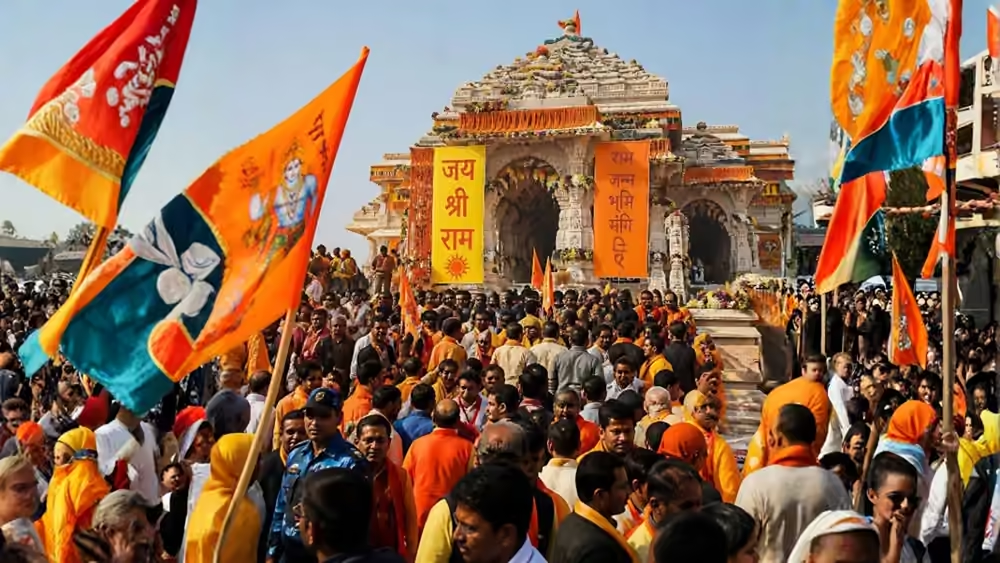
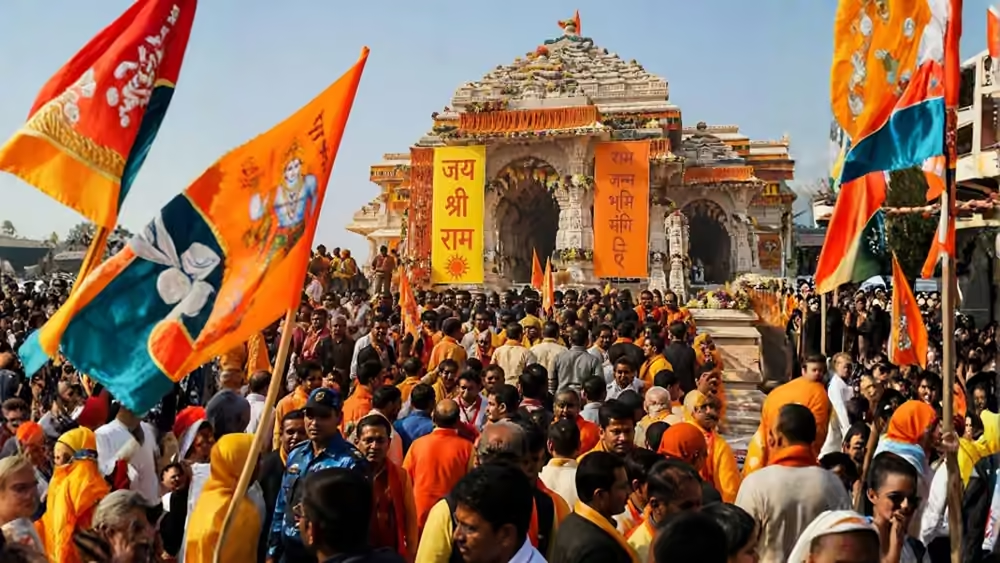
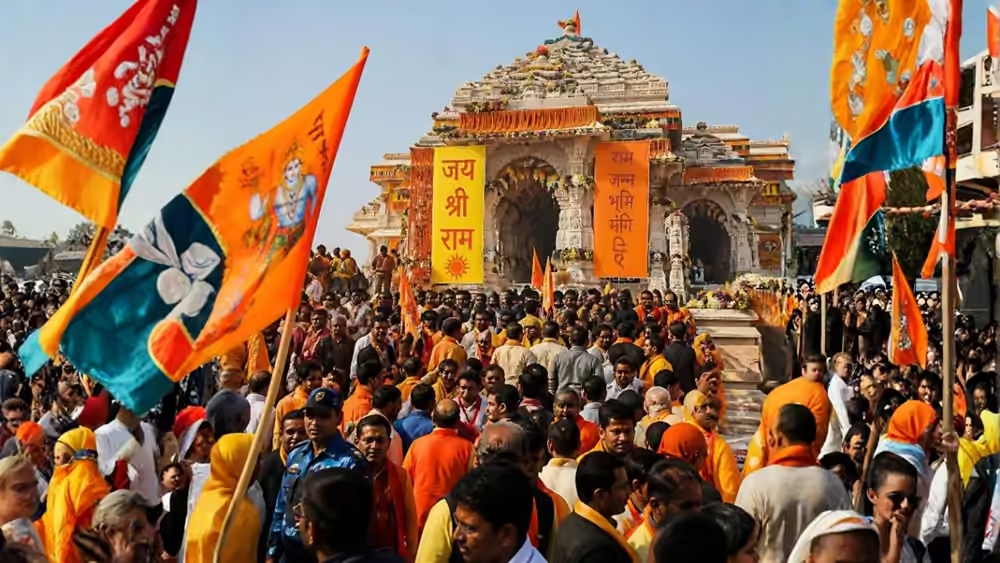
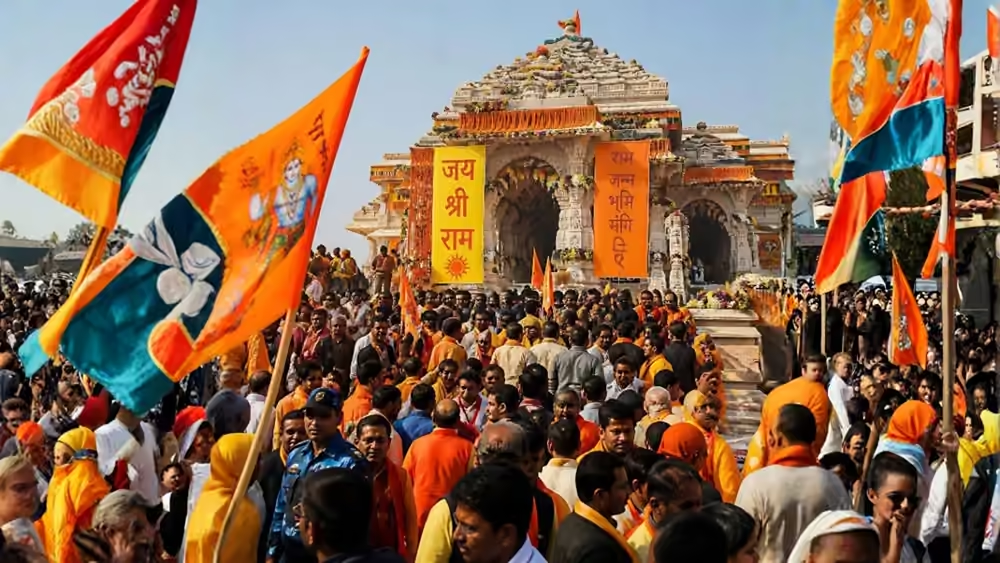
November is Ayodhya's crown jewel. The weather is ideal — 15–28°C — and the Deepotsav celebration lights over 2.2 million oil lamps along the Saryu ghats. It is arguably India's most visually stunning festival moment. But the city swells with visitors, and hotel prices climb sharply. Book three months ahead, or visit in the first week before the festival rush.

December

Detail Information
High/Low 22°C / 10°C
Rain ~1 day
Crowd Medium
Verdict Excellent — cool and calm

December is cold and clear. The fog on the Sarayu in the early morning is a photographer's dream, and the temple crowds are manageable outside the Christmas–New Year week. Carry a warm jacket for the Mangala Aarti and early morning darshan.

We match your travel dates to the month that suits your group best. Contact +91 7078723132

Festival Windows: When the Crowds Peak

Two festivals dominate Ayodhya's calendar. If you are planning around them, plan months ahead, not weeks.

Deepotsav (October–November)

Deepotsav is Ayodhya's Diwali celebration. The city claims the world record for simultaneous oil lamps lit on the Saryu ghats — over 2.2 million diyas in recent years. The Ram Mandir is illuminated, Ram Ki Paidi becomes a carpet of flame, and drone shows light up the river.

The cost: Hotel prices climb 2–4x, and the city is packed. Book 3 months ahead if you want to attend.

Ram Navami (March–April)

Ram Navami marks the birth of Lord Ram and draws massive crowds to Ayodhya. The celebrations are enormous, and the heat can be significant depending on the year. Plan temple visits for early morning, and expect queues at Ram Mandir and Hanuman Garhi.

We plan festival visits with pre-booked hotels and timed darshan slots. Contact +91 7078723132

Best Month for Different Travellers

Traveller Type Best Month Why
First-time visitors November to early February Easiest weather and most welcoming pace
Peaceful darshan Mid-week in late November or January, 6:30 AM slot Short queues, time to actually look up
Festival seekers Deepotsav (Oct–Nov) or Ram Navami (Mar–Apr) Unmatched atmosphere; book 3 months ahead
Photographers December and January mornings Fog on the Sarayu, golden light on sandstone
Families with elders Late October to early February Pleasant weather; skip Deepotsav week
Budget travellers April or September Off-peak rates, fewer queues

What to Pack, Season by Season

Ayodhya's packing list changes with the month. Here is what actually matters.

Winter (October–February)

  • Warm jacket or shawl — essential for the Mangala Aarti at 4:00 AM

  • Light woollens, gloves, thermal layers for early mornings

  • Cotton socks — temple floors are cold in winter

  • Slip-on sandals — you remove footwear at every temple

Summer (March–June)

  • Lightweight cotton only

  • Wide-brim hat and sunglasses

  • ORS sachets and extra water — dehydration is a real risk

  • Cotton socks — the marble floors get very hot by 10 AM

  • Sunscreen SPF 30+ — temple courtyards have no shade

Monsoon (July–September)

  • Quick-dry clothes

  • Waterproof sandals — stone steps near the ghats get slippery

  • Compact umbrella and rain cover for bags

  • Mosquito repellent for evening ghat visits

Year-Round Essentials

  • Aadhaar card or passport for Ram Mandir aarti pass booking and security checks

  • Printed Sugam Darshan pass if pre-booked

  • Cash — smaller shops may not accept cards

  • Personal medicines and blister plasters — you will walk extensively on marble and stone

We share a season-specific packing checklist with every guest. Contact +91 7078723132

Conclusion

Ayodhya's best months are October to March, but the right month depends on what you want. January and February give you the calmest, coolest visit. November gives you Deepotsav and the million-diya spectacle, at the cost of crowds and hotel prices. July and September give you an almost empty Ayodhya, if you can handle the humidity.

Do not visit in May or June unless you have no choice. The heat is not a minor inconvenience — it changes what you can do and when you can do it.

Pick your month based on your group. Elders need the winter window. Photographers need December fog. Budget travellers need April or September. Festival seekers need to book three months ahead.

And whatever month you choose, carry the right clothes, the right ID, and enough cash. Ayodhya rewards preparation.

Jai Shri Ram.

Contact

Call Us: +91 7078723132 | +91 9557104160
WhatsApp Us: +91 7078723132 | +919557104160

Hours: 8 AM to 9 PM daily

Our Services:

  • Season-Wise Ayodhya Tour Packages

  • Ram Mandir Sugam Darshan Assistance

  • Private AC Cab for Ayodhya Darshan

  • Hotel Reservations in Ayodhya

  • Local Guide for Ram Mandir and Saryu Ghats

  • Deepotsav and Ram Navami Planning

  • Customized Itineraries for Families, Elders, and Photographers

  • Pan-India Pilgrimage Packages — tripmybharat.com
PLAN YOUR VISIT WITH LOCAL EXPERTS

Ready to Plan Your Sacred Ayodhya & Varanasi Yatra?

Get customized itineraries with dedicated private AC cabs, verified hotel stays, and temple timing coordination.

Plan Your Journey →
Rohit
🏛️Resident Pilgrimage GuideView Profile →

Rohit

8+ Years on Ground

🛕Founder & Senior Pilgrimage CoordinatorAyodhya & Varanasi Resident Guide

Rohit is the Founder of Trip My Bharat Network with over 8+ years coordinating pilgrimages through the sacred shrines of Ayodhya, Varanasi, Prayagraj, and Gaya. He specializes in verified temple schedules, sthala purana documentation, and crowd-safe darshan planning.

Founder, Trip My Bharat Network
8+ Years Local Pilgrimage Experience
Resident Route Planning
Seasonal Darshan Details Reviewed
HAVE A QUESTION ABOUT THIS ROUTE?Ask Rohit on WhatsApp
Direct pilgrimage advice • Zero obligation
FREQUENTLY ASKED QUESTIONS

Frequently Asked Questions About Best Time to Visit Ayodhya

Verified answers from local pilgrimage guides for peaceful temple darshans, timings, and transportation.

QWhat is the best time to visit Ayodhya?▼
October to March is the best time, when temperatures stay between 12°C and 28°C and the weather is comfortable for temple visits and the Saryu Aarti.
QWhich is the best month for Ayodhya Ram Mandir darshan?▼
January and February are the best months for darshan. The weather is cool, crowds are low, and hotel rates are reasonable outside festival weeks.
QWhat is the weather like in Ayodhya in January?▼
January highs are around 20°C and lows around 10°C. Mornings can be foggy and cold, especially near the Saryu ghats. Carry a warm jacket for the Mangala Aarti.
QWhat is the weather like in Ayodhya in May?▼
May is the hottest month, with average highs of 42°C. The marble pathways around Ram Mandir radiate heat. Avoid afternoon darshan and carry cotton socks and ORS.
QWhat is the weather like in Ayodhya in July?▼
July is monsoon season, with highs around 33°C and lows around 25°C. It rains on nearly 23 days of the month. Crowds are the lowest of the year, but humidity is high and paths get slippery.
QIs November a good time to visit Ayodhya?▼
November has ideal weather (15–28°C), but it is also Deepotsav month. The city is packed, hotel prices climb 2–4x, and you need to book three months ahead.
QWhen is Deepotsav in Ayodhya?▼
Deepotsav falls around Diwali, typically in October or November. Dates vary each year. In 2026, check the official Ayodhya calendar for the exact week.
QWhen is Ram Navami in Ayodhya?▼
Ram Navami falls in March or April. It draws massive crowds and celebrations. Plan temple visits for early morning and book hotels well in advance.
QIs Ayodhya safe to visit during the monsoon?▼
Yes, but be prepared. The stone steps near the ghats get slippery, and rain can disrupt outdoor plans. Carry quick-dry clothes, waterproof sandals, and an umbrella.
QWhat should I wear in Ayodhya in winter?▼
Carry a warm jacket or shawl, light woollens, gloves, and thermal layers for early mornings. Cotton socks are useful because temple floors are cold.
QWhat should I wear in Ayodhya in summer?▼
Wear lightweight cotton, a wide-brim hat, and sunglasses. Carry ORS sachets, extra water, and sunscreen. Cotton socks protect your feet from hot marble floors.
QHow far in advance should I book a hotel for Deepotsav?▼
Book at least three months in advance. Hotel prices climb 2–4x during Deepotsav week, and rooms sell out.
QWhich month is best for a budget trip to Ayodhya?▼
April or September. Hotel rates drop to their lowest, and crowds are thin. But April is hot, and September is still humid.
QWhich month is best for photographers in Ayodhya?▼
December and January mornings. The fog on the Sarayu and the golden light on the sandstone are the best of the year.
QIs Ayodhya suitable for elderly pilgrims in summer?▼
No. May and June heat is harsh, with temperatures crossing 40°C. Elderly pilgrims should visit between October and February.
QWhat is the coolest month in Ayodhya?▼
January is the coolest month, with average lows around 10°C and highs around 20°C.
QWhat is the wettest month in Ayodhya?▼
August is the wettest month, with rain on nearly 28 days. July and September are also wet, with 23 and 21 rainy days respectively.
QWhat is the best time for a peaceful darshan at Ram Mandir?▼
Mid-week in late November or January, at the 6:30 AM slot. Queues are short, and you have time to actually look up.
QDo I need a sweater for Ayodhya in December?▼
Yes. December highs are around 22°C and lows around 10°C. A warm jacket or shawl is essential for early morning aarti and darshan.
QWhat is the weather like in Ayodhya in October?▼
October highs are around 31°C and lows around 21°C. Rain drops to about 3 days. The weather becomes pleasant, and Deepotsav may fall late in the month.
QIs Ayodhya crowded in February?▼
No. February has low crowds, mild weather (11–25°C), and no major festivals. It is one of the calmest months of the winter season.
QCan I visit Ayodhya in June?▼
It is possible but not recommended. June is still very hot, with highs around 40°C, and the monsoon begins late in the month. If you must travel, plan darshan for early morning or evening.
QWhat is the best month for a family trip with children?▼
November to February. The weather is cool and comfortable, and you can plan darshan without the heat. Avoid Deepotsav week if your children are very young.
QDo you offer season-wise Ayodhya tour packages?▼
Yes. We plan packages based on the month, crowd level, and your group's needs. Contact Rohit at 7078723132.
QHow do I book an Ayodhya tour for my preferred month?▼
Contact Rohit at 7078723132 between 8 AM and 9 PM daily, or visit tripmyayodhya.com.
EXPLORE MORE GUIDES

More Useful Reading for Your Yatra

View All Articles
Ayodhya Varanasi Prayagraj Tour Cost Per Person: Complete Budget Guide
📦Tour Package
23 Oct 2026
Verified Guide

Ayodhya Varanasi Prayagraj Tour Cost Per Person: Complete Budget Guide

The cost per person for an Ayodhya–Varanasi–Prayagraj tour ranges from ₹5,499 (shared tempo traveller group tour) to ₹28,999+ (luxury private package). A realistic mid-range budget with a private cab and 3-star hotels is ₹8,999–₹14,999 per person. A couple in a private sedan pays ₹12,999 per person for transport, while a group of 10+ pays ₹8,499 per person for the same route. The UPSTDC Spiritual Triangle package costs ₹14,400 per person in a sedan (minimum 4). General darshan at Ram Mandir, Kashi Vishwanath, and Triveni Sangam is free. Hotel rates range from ₹800–₹1,500 (budget) to ₹3,000–₹6,000 (premium). Food costs ₹200–₹600 per person per day. For a fixed, transparent per-person quote, contact Rohit at 7078723132 or visit tripmybharat.com.

Parking in Ayodhya – Car & Bus Parking Locations Guide
📖Pilgrim Guide
23 Oct 2026
Verified Guide

Parking in Ayodhya – Car & Bus Parking Locations Guide

No private car or bus can reach the Ram Mandir gate. Ram Path, Bhakti Path, and Janmabhoomi Path are strict pedestrian zones, and illegal entry carries a ₹500–₹2,000 fine. Park at one of the four major lots: Tedhi Bazaar Multi-Level (800 m, ₹50/2 hrs or ₹150/24 hrs), Naya Ghat (1.5 km, ₹40/4 hrs or ₹100/24 hrs, and the main bus ground), Saket Petrol Pump Ground (1.2 km, ₹50 flat), or Amaniganj (1.8 km, ₹40/2 hrs or ₹120/24 hrs). All tourist buses must park at Naya Ghat or the NH-27 bypass grounds. Last-mile e-rickshaws cost ₹20–₹30 per person, and battery carts are free for seniors (65+). Arrive before 8:00 AM on weekends. For parking coordination and darshan assistance, contact Rohit at 7078723132 or visit tripmyayodhya.com.

Ayodhya Tour Package from Varanasi One Day – Itinerary, Cost & Complete Guide
📦Tour Package
22 Oct 2026
Verified Guide

Ayodhya Tour Package from Varanasi One Day – Itinerary, Cost & Complete Guide

A one-day Ayodhya tour from Varanasi is possible but tight. The road distance is 200–220 km (4–5 hours each way by cab). You must leave Varanasi by 4:00 AM to cover Ram Mandir, Hanuman Garhi, Kanak Bhawan, Nageshwarnath, and the 6:30 PM Saryu Aarti before returning the same night. A 1-day express package starts at ₹2,500 per person; a private sedan round trip starts at ₹4,299 per group. Ram Mandir darshan is free — book the Sugam Darshan e-pass on online.srjbtkshetra.org exactly 15 days in advance. For a custom package with cab and darshan assistance, contact Rohit at 7078723132 or visit tripmyayodhya.com.